Trillboards Partners with Moving Walls for Programmatic DOOH

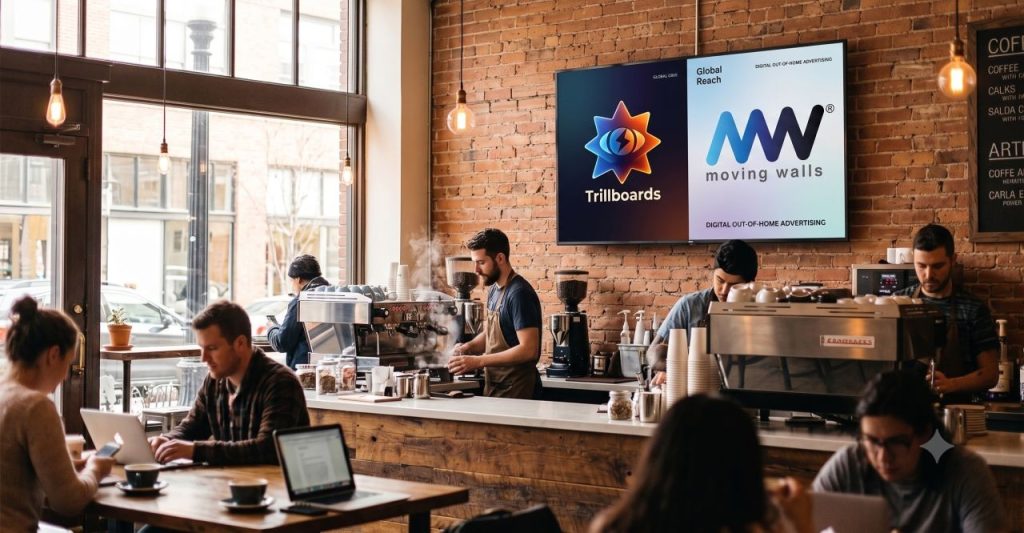
A new technical integration lets advertisers plan and buy Trillboards’ AI-powered screen network directly through Moving Walls’ DSP, marking another step forward for programmatic Digital Out-of-Home advertising.
The Digital Out-of-Home (DOOH) sector added another growth milestone this week. Trillboards, known for its AI-driven screen inventory and its proprietary “Sense Anything” measurement technology, has completed a technical integration with Moving Walls, a globally recognized enterprise software provider for the Out-of-Home (OOH) media industry. The move brings Trillboards’ full screen network into the Moving Walls ecosystem, giving advertisers a more direct, standardized path to programmatic DOOH campaigns.
What the Integration Actually Changes
Until now, buying inventory across independent DOOH networks often meant navigating separate systems, inconsistent measurement standards, and manual coordination. This integration removes much of that friction.
With Trillboards now onboarded into the Moving Walls platform, brands and agencies using Moving Walls’ demand-side platform (DSP) can:
- Plan campaigns using Trillboards’ screen network alongside other inventory sources
- Purchase placements through standard programmatic workflows, rather than one-off negotiations
- Execute and measure performance using Trillboards’ “Sense Anything” technology, which is built to track and verify audience engagement at the screen level
In practice, this means advertisers get a single, familiar buying interface instead of juggling multiple vendor relationships — a shift that mirrors what’s already happened in digital advertising more broadly, and one that DOOH has been steadily moving toward for years.
Why LATAM and Asia Are the Focus
The partnership isn’t just a technical handshake — it’s a deliberate play for two of the fastest-growing OOH markets in the world.
Joel Martin, Chief Revenue Officer at Trillboards, framed the geographic strategy directly:
“We see our future growth coming from the LATAM and Asia markets, regions where Moving Walls is also expanding and actively operating. We are excited to work with their team to make our inventory accessible to these buyers.”
That overlap is the real story here. Moving Walls has built a strong operational footprint across Asia and Latin America, two regions where urbanization, rising ad spend, and expanding digital infrastructure are fueling rapid DOOH growth. By plugging into that existing footprint, Trillboards effectively gains distribution in markets it would otherwise need years to build independently — while Moving Walls strengthens its platform with a technologically advanced inventory partner.
A Sign of Where Programmatic DOOH Is Headed
This integration fits a broader pattern playing out across the Out-of-Home industry: consolidation through technology rather than acquisition. Instead of merging companies, players are increasingly linking systems — combining specialized measurement or AI capabilities (like Trillboards’ “Sense Anything”) with established enterprise platforms that already have buyer relationships and market reach (like Moving Walls).
For advertisers, the benefit is practical: fewer platforms to manage, more standardized data, and easier access to inventory in markets that are harder to enter directly.
For the DOOH industry at large, it’s another signal that programmatic buying — once a niche capability — is becoming the default way screens get sold, verified, and measured, especially as global brands look to scale campaigns across multiple regions without reinventing their buying process market by market.
The Trillboards–Moving Walls integration is a relatively quiet technical announcement with a fairly loud implication: programmatic DOOH is maturing fast, and the networks that plug into established DSPs early are positioning themselves to capture growth in the markets that matter most right now — LATAM and Asia. Expect more of these platform-to-platform integrations as DOOH continues its shift from a fragmented, relationship-driven industry to a data-standardized, programmatic one.