BoursoBank Skips World Cup Sponsorship — And Turns Bar TVs Into Its Own Stadium

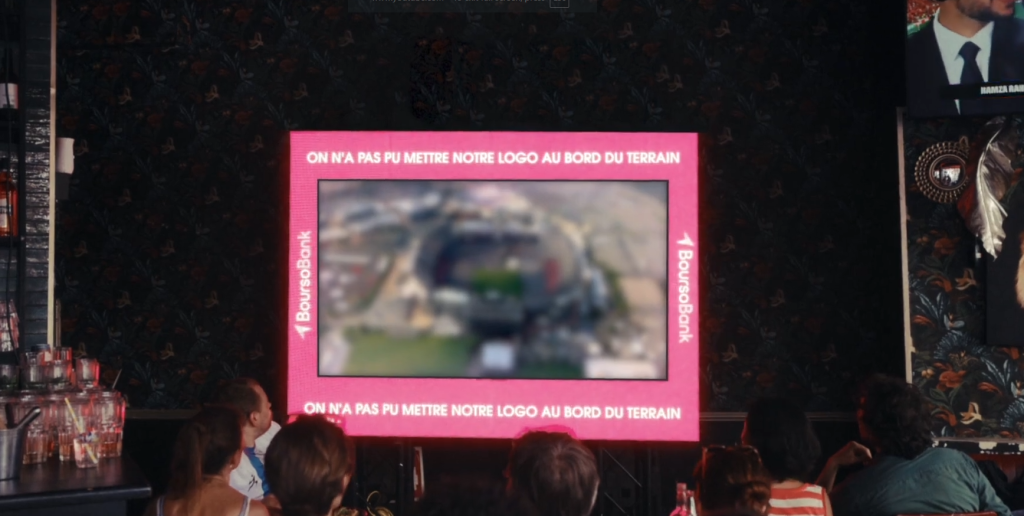
A French Digital Bank Just Invented a New Ad Format Instead of Paying for One
When the FIFA World Cup rolls around, most brands fight over the same real estate: pitch-side LED boards, broadcast sponsorship slots, halftime idents. It’s effective, but it isn’t cheap, and only a handful of global players can justify the price tag.
BoursoBank — the French online bank formerly known as Boursorama Banque, and a wholly owned subsidiary of Société Générale — decided that price tag wasn’t for them. Instead of buying its way onto the pitch, the bank and its longtime creative agency Buzzman built an entirely new advertising format around the one thing every stadium sponsorship can’t control: the television set sitting in a packed Parisian bar.
They’re calling it “bords de TV” — TV-side boards.
The Idea: If You Can’t Advertise On the Screen, Advertise Around It
The insight behind the campaign is almost embarrassingly simple once you hear it. During any major match, bars fill with fans who aren’t just watching the broadcast — they’re watching the room, the crowd, the screen, and everything framing it. BoursoBank and Buzzman built the campaign around a straightforward observation: for every major sporting event, bars are packed with supporters who come to experience the match together, and at the center of all that attention sits one object — the television.
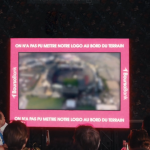
So BoursoBank claimed that object. The bank now frames physical TV screens in its own brand colors, an exact replica of pitch-side LED boards, turning ordinary television sets into a fully-fledged advertising medium.
There’s one rule the campaign never breaks: the branded frames never appear during actual play. Messaging only pops up before kickoff, at halftime, and after the final whistle a deliberate choice that keeps the format from ever feeling like it’s stealing attention away from the game itself. It’s a small detail, but it’s the kind of restraint that separates a clever hijack from an annoying one.
Why This Matters: Official Sponsorship Isn’t the Only Way In
The campaign deliberately sidesteps the usual codes of sports sponsorship — while major brands typically fight over ad space on the pitch or during halftime of televised events, the online bank chose a more unexpected battleground: the edges of the screens inside the bars where fans actually watch the matches.</cite> It’s a pointed reminder that “official partner” status isn’t the only route to relevance during a global tournament — sometimes the smarter play is finding the attention nobody else has claimed yet.
There’s also a practical reason behind the workaround: unable to buy space on the LED boards inside the North American stadiums hosting this World Cup, the bank found an equally strategic alternative in the bars where supporters gather instead. Rather than treat that as a limitation, BoursoBank and Buzzman turned it into the entire creative premise.
Industry commentary on the campaign frames it as part of a broader shift in sports marketing: brands increasingly don’t need official partner status to show up meaningfully during major events — they just need a sharper read on where fans’ attention actually lives.
How the Rollout Works
The campaign isn’t a single stunt — it’s a staged rollout across three layers of fan attention:
- Bars first. The operation launched on June 16 across eight partner bars in Paris, orchestrated by Buzzman alongside media agencies iProspect and MediaBar.
- Social media next. Once the physical activation was live, the campaign moved to amplification across BoursoBank’s social channels, extending the visual gag beyond the eight physical locations.
- Streaming last. The format even extends into Twitch streams, where content creators commentating on matches incorporate BoursoBank’s branded screen edges directly into their broadcasts — starting with L’Immigré Parisien, who brings an audience of 2.3 million subscribers.
The campaign is scheduled to run through July 30.
Not BoursoBank’s First Unconventional Move
This isn’t a one-off flex. BoursoBank has spent the past few years building a reputation — largely through Buzzman — for marketing that plays games with format and expectation rather than leaning on straightforward brand messaging.
Late last year, the bank ran a campaign built around hiding the number 18 — its 18th consecutive year (per the Le Monde/Panorabanques ranking) as France’s cheapest bank — inside parodies of familiar TV formats. The films and visuals spoofed heavily codified formats like sports coaching, weather broadcasts, and televised talent shows, planting the number 18 in unexpected places for audiences to spot, almost like a marketing version of “Where’s Waldo?” The year before that, the bank compared its own consecutive-years streak to the records of Usain Bolt, Sébastien Loeb, and other champion athletes.
Even BoursoBank’s more conventional work carries the same instinct for reframing. In one 2024 spot directed by Romain Chassaing, two women use a frantic time-travel plot — bouncing from prehistoric times to the French Revolution to the future — just to convince their younger selves to switch to BoursoBank sooner.
The TV-side boards campaign fits that same pattern: rather than competing for the sponsorship inventory everyone else wants, BoursoBank keeps looking for the attention nobody else has thought to claim.
The Takeaway for Marketers
BoursoBank’s move is a useful case study in a broader marketing lesson: big-event visibility doesn’t have to mean big-event budgets. Official sponsorship buys guaranteed placement, but it also buys a crowded field — every rival bank, insurer, and telecom brand competing for the same broadcast seconds. By inventing its own format around an overlooked physical object, BoursoBank secured genuine novelty (nobody else is doing this, yet), controllable production costs (eight bars, not eight stadiums), and a story worth covering — which is exactly what’s happening right now.
Whether “bords de TV” becomes a repeatable format for future tournaments or a one-tournament novelty remains to be seen. But as a demonstration of how a challenger brand can out-think rather than out-spend its way into the World Cup conversation, it’s hard to beat.