Animal Planet Brings ‘Enter the Wild’ Experience to Bhartiya Mall, Bengaluru

For decades, a channel like Animal Planet has lived almost entirely inside a television screen or, more recently, a streaming app. In February 2026, Warner Bros. Discovery India took that brand out of the screen entirely and turned a shopping mall in Bengaluru into a two-day, walk-through wildlife experience. The event, “Enter the Wild – Discover How Animals Survive the Wild,” ran February 21–22 at Bhartiya Mall and offers a useful window into a broader shift happening across media and entertainment brands: experiential marketing that treats a physical space as an extension of the content itself, not just a promotional pop-up. Here’s a detailed look at what the activation actually involved, what made it more than a typical brand stunt, and what it signals for how media companies are trying to stay relevant with families in an on-demand world.
Turning a Mall Into a Habitat, Not Just a Booth
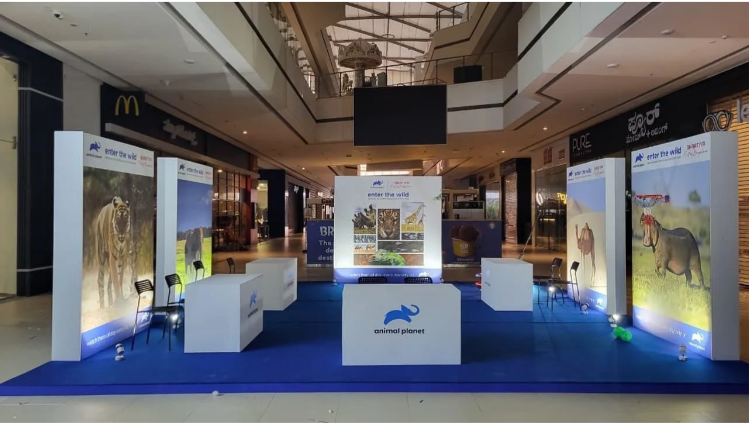
The most notable thing about “Enter the Wild” wasn’t any single attraction — it was the decision to redesign the mall itself around wildlife environments rather than dropping a few branded booths into an existing space. Visuals represented deserts, jungles, icy terrain, and river ecosystems, giving the event a sense of moving through different habitats rather than visiting a single themed corner.
Within that space, two stations stood out as genuine learning tools rather than pure photo opportunities:
- The Camel Survival Station focused on how camels physically endure extreme desert heat and water scarcity — the kind of specific biological adaptation that’s easy to explain on a nature documentary but harder to make tangible for a child in an urban mall.
- The Penguin Waddle Challenge turned penguin locomotion into a physical activity, letting kids actually move the way a penguin moves rather than just watching a video clip of one.
That distinction matters for anyone evaluating whether an activation like this actually delivers educational value or is purely decorative: physical, participatory stations tend to create stronger recall in children than passive displays, which is likely why Animal Planet built the event around movement and hands-on interaction rather than static exhibits.
Blending Screen-Based Storytelling With Physical Play
Beyond the two headline stations, the activation included a 360-degree immersive video booth simulating wildlife environments and a “Date With Your Pet” photo corner set against jungle-themed backdrops — a detail that ties the event back to families’ everyday relationship with animals, not just the exotic wildlife typically featured in the channel’s programming.
The event also incorporated structured educational content: interactive games built around survival scenarios, and curated workshops walking children through animal habits, ecosystems, and adaptation strategies. This combination — physical play paired with structured, curriculum-like content — is what separates a genuine experiential learning activation from a simple branded photo-op tour.
Why a TV Channel Is Investing in Physical Space
Janhavi Vyas, Head of Marketing, South Asia at Warner Bros. Discovery, framed the initiative as an effort to extend Animal Planet’s wildlife storytelling beyond the television screen, describing the goal as creating meaningful real-world touchpoints that reinforce the brand’s position as a trusted source of wildlife content for families.
That framing points to a real structural challenge facing legacy TV brands: audience attention, especially among children and families, is increasingly fragmented across streaming platforms, short-form video, and gaming. A channel can’t rely on appointment viewing the way it once did. Building physical, memorable experiences — the kind a child might talk about at school the next week — is one way to create a form of brand loyalty that a 30-second ad or a social post generally can’t replicate.
What This Signals for Experiential Marketing in Media
A few things about this specific activation are worth noting if you’re evaluating similar strategies for a brand, or simply trying to understand where entertainment marketing is heading:
- Physical activations are being designed around actual content themes, not generic branding. The camel and penguin stations directly mirror the kind of survival-focused storytelling Animal Planet is known for on-screen, rather than using disconnected mascots or unrelated games.
- Family and pet-owner audiences are being targeted together, not separately. By including a pet-focused photo corner alongside wildlife education stations, the event widened its appeal beyond just parents bringing children to a kids’ activity.
- Two-day, single-location activations are being used as high-intensity brand moments rather than long-running installations. This trades broad reach for concentrated impact — a strategy that works well when paired with press coverage and social content extending the event’s life beyond the physical two days.
- Malls are increasingly functioning as experience venues, not just retail space. Bhartiya Mall’s willingness to redesign its common areas around a media brand’s content reflects a broader trend of malls competing on experience and footfall, not just tenant mix.
“Enter the Wild” is a clear example of a media brand treating physical space as a genuine content channel rather than a marketing afterthought. By grounding the activation in real animal survival themes — desert adaptation, penguin movement, ecosystem awareness — rather than generic branded fun, Animal Planet built something closer to an offline extension of its programming than a typical promotional event. For families in Bengaluru, it offered a rare chance to physically engage with the kind of content usually experienced passively on a screen — and for the broader industry, it’s a preview of how legacy TV brands are likely to keep fighting for relevance as viewing habits keep fragmenting.