How OPPO India Turned Select City Walk Into a Programmatic DOOH Success Story

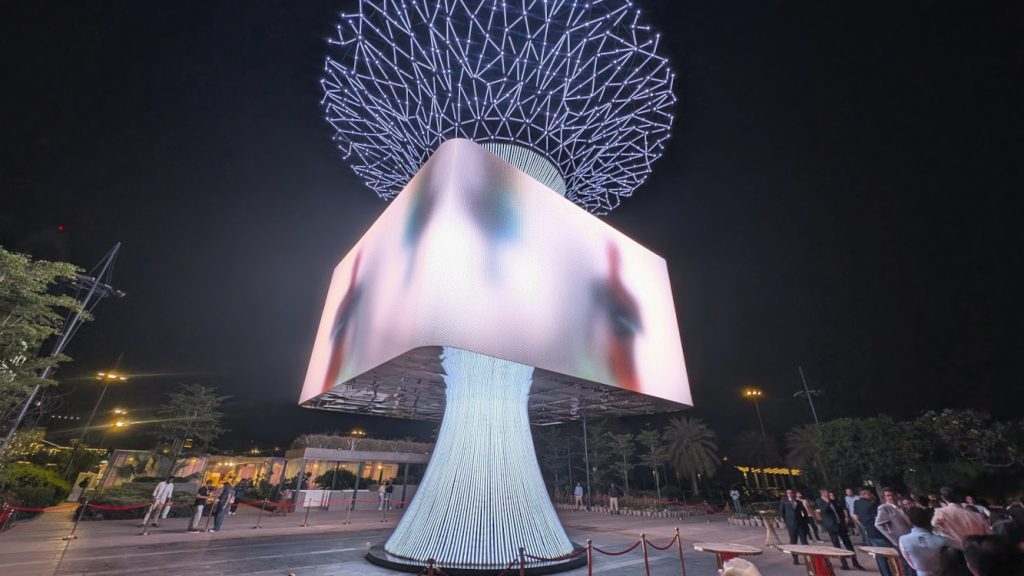
Walk through Select City Walk in Delhi on any given evening and you’ll see thousands of shoppers glance up at the mall’s giant digital screens without a second thought. What most of them don’t realize is that the ad they just saw may have been placed there in real time, chosen specifically for that hour, that footfall pattern, and that audience — not by a media planner picking a slot months in advance, but by a programmatic bidding system working in the background. That’s exactly what happened when OPPO India ran its latest brand campaign across some of the country’s most iconic digital-out-of-home (DOOH) locations, with Select City Walk as the centerpiece.
The Campaign: Data First, Screens Second
Rather than starting with a media list, the OPPO India campaign started with a question: where does the brand’s target audience actually spend their time, and when? That audience-led approach shaped everything that followed — from shortlisting premium sites across multiple cities to activating the buy programmatically through Google’s Display & Video 360 (DV360).
Select City Walk was the flagship placement, and for good reason. It’s one of the highest-footfall retail destinations in North India, drawing a young, affluent, tech-aware crowd — precisely the demographic a smartphone brand wants standing in front of its screens. Beyond that single site, the campaign extended to other high-impact urban locations, each selected for its ability to combine visibility, dwell time, and audience relevance rather than just raw screen size.
Why Programmatic DOOH Is Having a Moment in India
This kind of campaign wouldn’t have been possible in quite the same way even three or four years ago. India’s DOOH advertising market has been on a steep growth curve, with the country’s overall DOOH market estimated at roughly ₹700–900 crore and expected to cross ₹1,000 crore by 2026, expanding at a 20–25% annual rate. Programmatic buying is the fastest-growing slice of that pie: industry forecasts point to programmatic formats accounting for around 20% of all DOOH ad spend in India by 2026, up from a much smaller base just a couple of years ago.
Zoom out further and the picture is similar. Globally, the programmatic DOOH platform market is projected to grow from roughly $6.83 billion in 2026 to $12.88 billion by 2030, driven largely by AI-led optimization and real-time audience analytics rather than static ad buying. India is still catching up to more mature markets some estimates put the country at under 5% programmatic DOOH adoption versus 32–40% in the US, UK, and Australia but that gap is exactly why campaigns like OPPO’s stand out. Brands willing to invest in programmatic infrastructure now are effectively getting first-mover advantage on premium inventory before the broader market catches up.
What “Programmatic” Actually Changes on the Ground
For a campaign like this, programmatic activation through DV360 isn’t just a technical detail — it changes what’s possible creatively and strategically:
- Real-time flexibility. Instead of locking in the same creative for weeks, screens can be updated based on time of day, footfall, or campaign performance.
- Audience-led site selection. Locations are chosen because the data says the right people are there, not because the site has historically been popular.
- Measurable delivery. Programmatic buys come with reporting that traditional static hoardings simply can’t match, which matters increasingly to CMOs asked to justify OOH spend against digital channels.
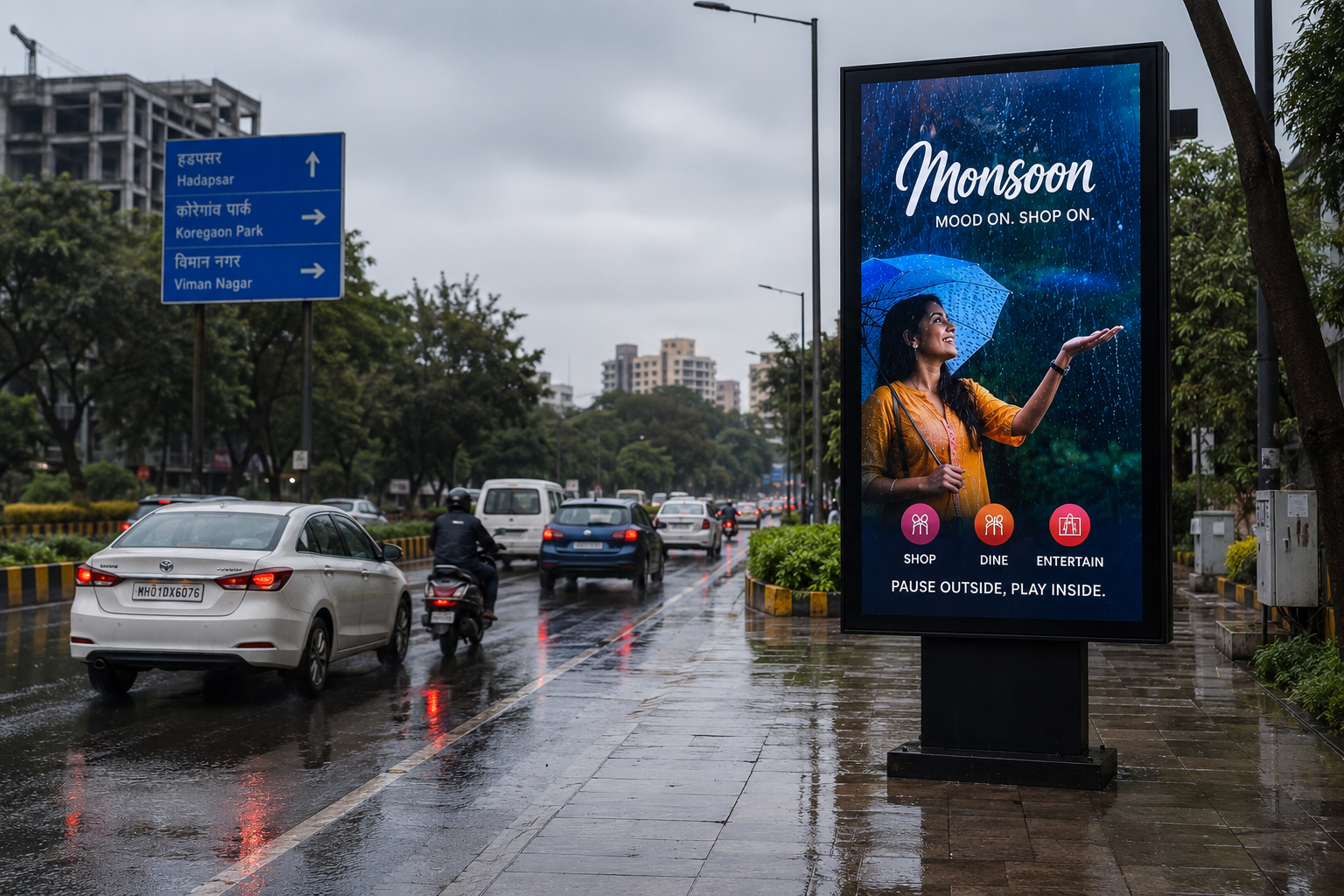
This mirrors a broader shift happening across Indian metros. Delhi Metro, for instance, rolled out programmatic-enabled screens across its Blue Line stations in early 2025, letting advertisers switch campaigns in real time, while similar smart-screen rollouts are underway in Hyderabad and Pune. Select City Walk fits squarely into this trend — a physical space that now behaves, in advertising terms, a lot more like a website than a billboard.
The Team Behind the Execution
Campaigns of this scale don’t come together on data alone; they need people who understand both the media landscape and the technology stack. OPPO India’s marketing team worked closely with its media and programmatic partners — including the team at SkyCom — to move from audience insight to site shortlisting to live activation on DV360. That kind of cross-functional coordination, spanning brand strategy, media planning, and ad-tech execution, is quickly becoming the standard for any brand serious about premium DOOH.
Why This Matters for Other Brands
The OPPO India–Select City Walk campaign is a useful case study for any marketer weighing whether programmatic DOOH is worth the added complexity versus traditional static buys. A few takeaways worth borrowing:
- Start with the audience, not the inventory. Site selection should follow data, not the other way around.
- Prioritize a handful of truly premium, high-dwell locations over a large number of average ones — impact scales with relevance, not just reach.
- Treat DOOH as a measurable channel. Programmatic activation only pays off if the results are tracked and compared, the same way a digital campaign would be.
As India’s programmatic DOOH infrastructure matures, expect more brands to follow this playbook — treating city landmarks like Select City Walk not just as billboards, but as addressable, data-driven media inventory in their own right.
Sources: Research and Markets, “Programmatic DOOH Platform Market Report 2026”; Adgully, “Indepth: DOOH heads to ₹1,000–2,000 cr market by 2026” (Jan 2026); Adgully, “India’s DOOH advertising market set to triple by 2033” (Nov 2025); Adgully, “DOOH surges 70% YoY…” (Oct 2025); Unpromptd, “India’s 26x Programmatic DOOH Gap” (Feb 2026).