How DOOH Is Making Outdoor Advertising Impressive and Engaging in Monsoon

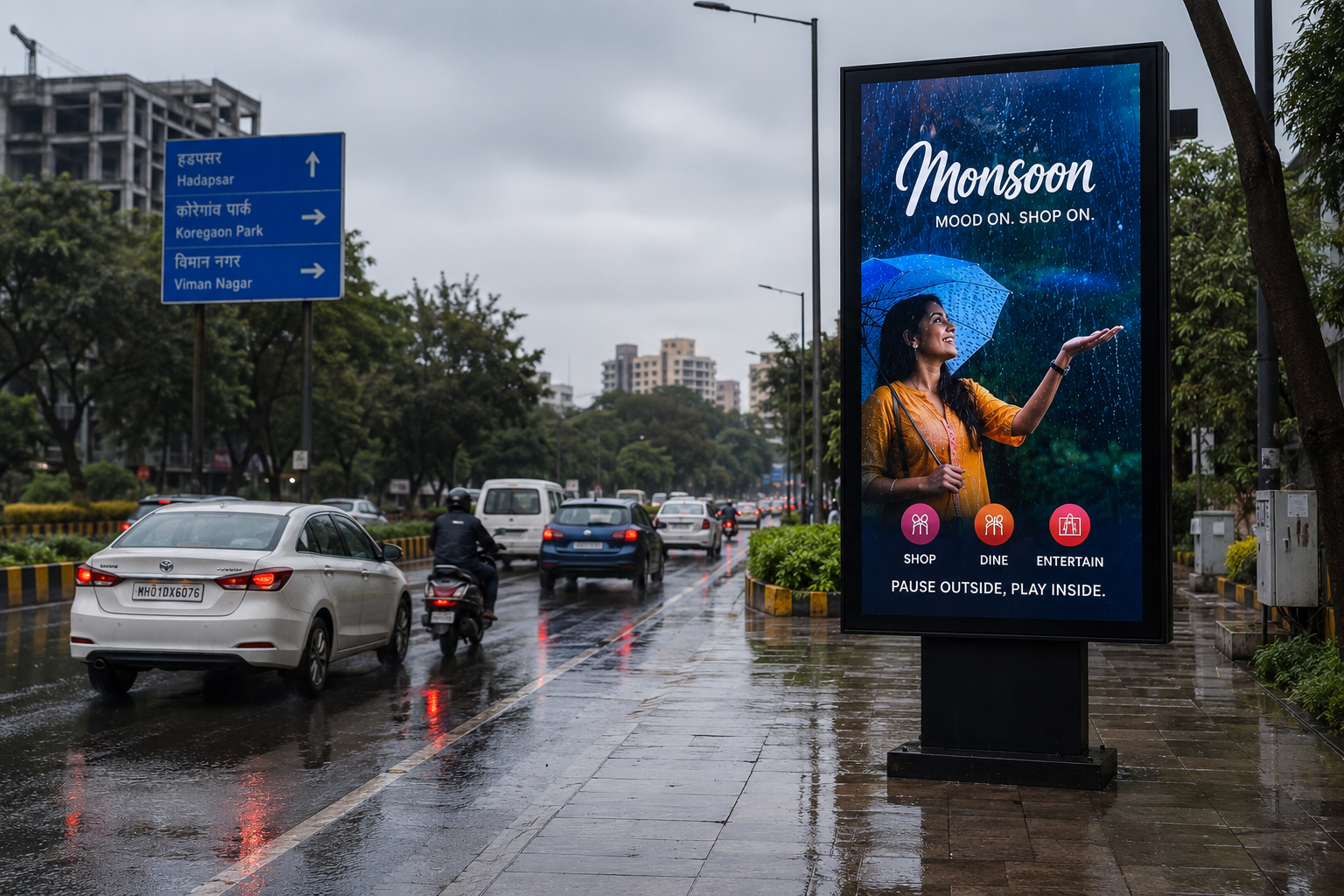
Monsoon changes everything about how people move through a city. Commutes stretch longer, footfall shifts indoors, and the same billboard that felt sharp in April can feel completely out of place in July. For outdoor advertising to stay relevant during this season, it has to move as fast as the weather does. That’s exactly where Digital Out-of-Home (DOOH) advertising earns its place — not as a nice-to-have, but as the format built for exactly this kind of unpredictability.
Here’s a closer look at why monsoon is one of the strongest windows of the year for DOOH, and how brands across categories are using it to their advantage.
Monsoon Changes Consumer Movement and Commuting Patterns
Rain doesn’t stop people from moving — it just changes how, when, and where they move.
- Commuters shift from two-wheelers to cabs, autos, and public transport
- Office-goers leave earlier or later to avoid waterlogged routes
- Footfall moves from open markets to malls, metro stations, and covered arcades
- Short, spontaneous outdoor trips (walks, errands, roadside stops) drop, while planned indoor visits rise
This isn’t a minor behavioural blip — it’s a predictable, season-wide pattern that repeats every year. Static billboards placed on the assumption of “normal” traffic flow often end up facing the wrong audience at the wrong time. DOOH screens placed strategically across metro stations, bus shelters, highways, mall entrances, and transit corridors are positioned exactly where monsoon pushes people, making them far more likely to be seen and remembered.
Real-Time, Weather-Responsive Messaging Is DOOH’s Biggest Advantage
This is the feature that truly sets DOOH apart from traditional hoardings: the ability to change creative remotely, within minutes, based on live weather conditions.
A single campaign can run multiple versions of the same message, triggered automatically or manually as conditions shift:
- Light drizzle: “Don’t let the rain slow you down — grab your umbrella deal now”
- Heavy downpour: “Stay dry, stay warm — hot beverages just around the corner”
- Post-rain humidity: “Beat the mugginess with [product]”
- Waterlogging alert: “Take the safer route — check live traffic updates”
This kind of dynamic creative optimisation (DCO) means a brand’s message is never generic or stale. It reacts to what people are actually experiencing outside their window at that exact moment, which makes the ad feel less like advertising and more like useful, timely information. That relevance is a major reason DOOH consistently earns higher recall and engagement during unpredictable weather compared to static formats that can’t adapt at all.
Traffic Congestion and Longer Dwell Time Work in DOOH’s Favour
Monsoon traffic is slower, denser, and far more predictable in its slowness. Waterlogged roads, reduced visibility, and cautious driving all add up to longer time spent at signals, on highways, and inside vehicles.
At the same time, transit hubs — metro stations, bus stops, railway platforms, airport lounges — see people waiting longer than usual, sheltering from rain or delays.
For advertisers, this translates directly into:
- More time in front of the screen at traffic signals and highway DOOH sites
- Higher attention spans among commuters who have nothing else to do but wait
- Repeated exposure for people using the same route or hub daily during the season
Longer dwell time is one of the most underrated advantages of monsoon-season DOOH. An ad that might get a two-second glance on a clear day can hold attention for significantly longer when the audience is stuck waiting it out.
Which Industries Benefit Most from Monsoon DOOH Campaigns
Not every category needs to advertise during monsoon, but for the ones below, this season is often the single best opportunity of the year to connect with a relevant, receptive audience.
Automobiles Rain shifts interest toward safety features — all-weather tyres, better grip, visibility, and reliability. DOOH near highways and dealerships can push test-drive offers the moment weather turns favourable for a showroom visit.
Beverages Hot beverages, immunity drinks, and comfort-food pairings see a natural spike in demand during rain. Weather-triggered creative around chai, coffee, and soups performs especially well near transit hubs and office clusters.
Healthcare Monsoon brings a predictable rise in seasonal illnesses, and healthcare brands — from pharmacies to hospitals to immunity supplements — can use DOOH to promote preventive care, flu shots, and health check-ups exactly when awareness is highest.
Insurance Waterlogging, vehicle damage, and health risks make monsoon a natural trigger point for insurance messaging — motor insurance, health cover, and even home insurance for flood-prone areas.
Rainwear This is the most literal fit. Umbrellas, raincoats, and waterproof footwear see a direct, immediate spike in relevance the moment it starts raining — and DOOH can push that message in real time, not days later.
Waterproofing Solutions Homeowners and builders actively search for waterproofing fixes right as leaks and dampness show up. DOOH near hardware markets, housing societies, and highways leading to construction hubs captures this intent-driven audience effectively.
Construction Materials While heavy construction slows during monsoon, planning and material sourcing for the post-monsoon season often begins early. Brands can use this window to build awareness ahead of the rush.
Why Monsoon Is the Season to Lean Into DOOH, Not Pull Back
Many advertisers instinctively scale back outdoor spend during monsoon, assuming poor visibility or bad weather will hurt performance. In reality, the opposite is often true. Audiences are still moving, just differently. They’re spending more time in transit, more time waiting, and more time looking for solutions to weather-driven problems — and DOOH is the one outdoor format flexible enough to meet them there with the right message at the right moment.
For brands willing to plan ahead with weather-responsive creative and smart site selection, monsoon isn’t a challenge to work around. It’s one of the most effective windows of the year to be seen, remembered, and acted on.