When Every Cab Becomes a Billboard: Garnier’s OOH Campaign in Mumbai & Kolkata

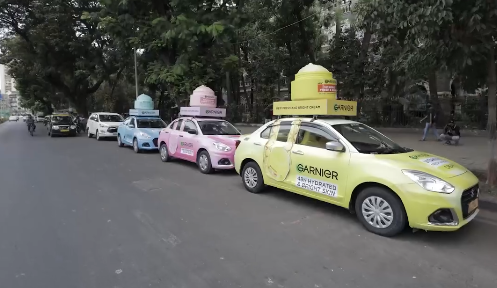
The city was the route. Garnier was the destination.
That’s the idea behind Garnier’s latest Out-of-Home (OOH) campaign across Mumbai and Kolkata. Instead of buying billboard space, the brand turned everyday cabs into moving product displays — and drove them straight through some of India’s most iconic streets.
Here’s a simple breakdown of what the campaign did, and why it works.
What Garnier Actually Did
Garnier ran three branded cabs, each one built around a different face cream:
| Cab Color | Product | Key Message |
|---|---|---|
| Pink | Fresh and Plump Cream | 48H Hydrated & Bright Skin |
| Teal/Blue | Salicylic Fresh & Matte Cream | 48H Hydrated & Bright Skin |
| Yellow | Vitamin C Fresh & Bright Cream | 48H Hydrated & Bright Skin |
Each cab carried a giant 3D replica of its product jar on the roof, sized to stand out above regular traffic. The car body itself was wrapped to match — so from far away, the cab looked like the product it was selling.
No long copy. No fine print. Just color, shape, and a clear promise: hydrated, brighter skin in 48 hours.
Where the Cabs Went
The campaign wasn’t parked in random spots. It showed up at locations people already recognize and photograph:
- Victoria Memorial, Kolkata — all three cabs lined up against the marble monument
- Taj Mahal Palace Hotel, Mumbai — the yellow cab framed against the hotel’s domes
- Oval Maidan, Mumbai — the fleet parked on open grass with the skyline behind it
- Regular city streets — weaving through everyday Mumbai traffic
In Kolkata, Kolkata Traffic Police barricades are visible near Victoria Memorial, which suggests this was a properly coordinated shoot, not a quick guerrilla stunt.
Why This Campaign Works
1. It turns products into landmarks
Placing a giant product jar next to a real landmark does two things at once: it grabs attention, and it borrows the location’s credibility. People already stop to photograph Victoria Memorial or the Taj Mahal Palace Hotel. A bright pink cab in that frame gets noticed — and shared.
2. Color does the talking
Three cabs, three colors, three products. No one needs to read anything to know which cab sells what. That’s smart design for a format where you only get a few seconds of attention.
3. It goes where billboards can’t
A fixed billboard waits for people to walk past. A cab fleet moves through neighborhoods, markets, and traffic jams all day — reaching commuters who’d never see a static ad in the same week.
4. It’s built to be filmed
Landmark backdrops, bold colors, oversized props — this campaign wasn’t just made for the street. It was made for reels, shares, and screenshots, which stretches its reach far beyond the people who saw the cabs in person.
The Bigger Trend: Mobility Is Becoming Media
More Indian brands are treating commutes as ad space, not just the roads around them. Instead of paying for a fixed spot and waiting, brands like Garnier are sending the ad out to find the audience — through traffic, past monuments, and into daily routines.
That’s the real shift here. Garnier didn’t just advertise in Mumbai and Kolkata.
It used the cities themselves — their traffic, their landmarks, their streets — as the media.
Quick FAQs
What is OOH advertising? Out-of-Home (OOH) advertising reaches people outside their homes — through billboards, transit ads, cab branding, and similar formats.
What made Garnier’s cab campaign different? Instead of one generic ad, Garnier ran three color-coded cabs, each shaped like a specific product, and placed them at recognizable city landmarks in Mumbai and Kolkata.
Which cities and landmarks were part of the campaign? Confirmed locations include Victoria Memorial (Kolkata), the Taj Mahal Palace Hotel (Mumbai), Oval Maidan (Mumbai), and general street traffic across both cities.
Why do brands use landmarks in OOH campaigns? Landmarks are already recognizable and photogenic. Placing branded content near them boosts both attention on the street and shareability online.