
Top DOOH Inventory Marketplaces & Platforms
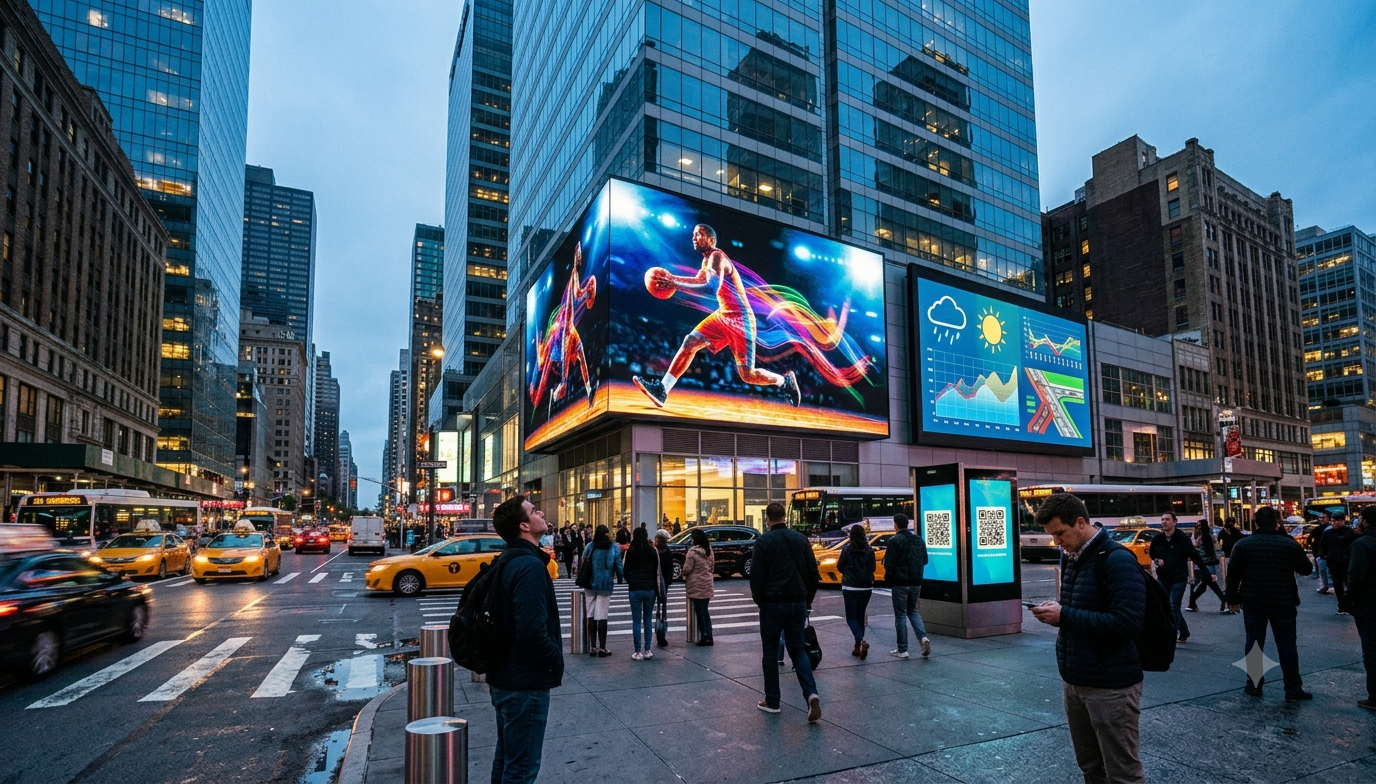
The Digital Out-of-Home (DOOH) advertising industry has evolved rapidly with the rise of programmatic buying, real-time data, and automated inventory marketplaces. Today, brands no longer need to manually negotiate billboard deals—they can access global DOOH inventory through advanced platforms, DSPs, and exchanges.
In this blog, we’ll explore the top DOOH inventory marketplaces, including:
- Moving Walls
- Google Display & Video 360
- Vistar Media
- The Neuron
We’ll also break down key concepts like DSP, CMS, real-time purchasing, transparency, and data-driven targeting.
1. Moving Walls Market
Moving Walls operates as a comprehensive omnichannel inventory marketplace, specifically designed for high-precision delivery.
-
MW Market: A discovery and activation platform where agencies can model reach based on real-world audience movement patterns.
-
Operational Precision: Their “MW Influence” architecture provides media owners with tools for automated scheduling and 100% delivery precision, moving away from reactive management.
-
Strategic Targeting: Focuses on high-mobility corridors (transit hubs, airports) and uses proximity-based triggers to align ads with peak commuter behavior.
2. Google Display & Video 360 (DV360)
DV360 has integrated DOOH as a native channel within its massive programmatic suite, allowing advertisers to manage OOH alongside display, video, and CTV.
-
Unified Management: Brands can use existing programmatic budgets and apply Google’s intelligent automation (machine learning) for bidding and optimization.
-
Programmatic Guaranteed: By March 2026, DV360 transitioned to API-driven deal syncing for Programmatic Guaranteed deals, enhancing efficiency for high-value DOOH inventory.
-
Data Integration: Natively connects with Analytics 360 to provide a complete view of how DOOH exposure impacts digital actions like web searches.
3. Vistar Media
Vistar Media remains a dominant specialized player, offering one of the world’s largest DOOH-only ad exchanges.
-
The Vistar DSP: Uses “advertising detective” technology to analyze daily movement patterns and perform Real-Time Bidding (RTB) only on spots that reach target personas.
-
Automated Transcoding: Their platform automatically adapts creative assets for various digital screen formats, simplifying the creative management process.
-
Supply-Side Strength: Vistar’s SSP allows media owners to set rules, prices, and approve/deny creative content in real time.
4. The Neuron
The Neuron has carved out a niche by making premium DOOH accessible to both Small-to-Medium Businesses (SMBs) and large enterprises through a user-friendly self-service platform.
-
AI-Powered Planning: Users enter a budget and audience, and an AI assistant builds an optimized campaign plan.
-
Point of Interest (POI) Targeting: Allows brands to run tactical campaigns during high-traffic hours specifically on screens around their physical store locations.
-
Playout Transparency: Provides clear estimations of how many “plays” a budget will achieve before the campaign goes live.
Programmatic Access: Transparency & Data
The move to programmatic has solved the historical “black box” issue of OOH advertising through three key pillars:
-
Real-Time Purchasing: DSPs connect with SSPs to enable Real-Time Bidding (RTB), allowing brands to pause, scale, or redirect budgets instantly based on performance or weather triggers.
-
Data-Driven Targeting: Instead of static assumptions, campaigns are activated by live signals such as weather, time of day, and mobility patterns without relying on sensitive personal identifiers.
-
Proof-of-Play (PoP): Platforms now provide automated delivery-level reporting and play logs, confirming exactly when and where an ad ran with 100% transparency.
DOOH Technology Stack: DSPs & CMS
Modern DOOH success relies on a tightly integrated technical stack:
-
Demand-Side Platform (DSP): The buyer’s interface (e.g., DV360, Vistar DSP) used to set audience parameters, manage budgets, and bid on inventory.
-
Supply-Side Platform (SSP): Used by media owners to aggregate inventory and connect it to various DSPs.
-
Content Management System (CMS): The software that physically pushes the ad to the screen. Platforms like Broadsign Reach integrate the CMS directly with programmatic monetization, creating a seamless scheduling-to-delivery ecosystem.