The Future of DOOH: How AI & Programmatic Technology Are Transforming Out-of-Home Advertising in 2026

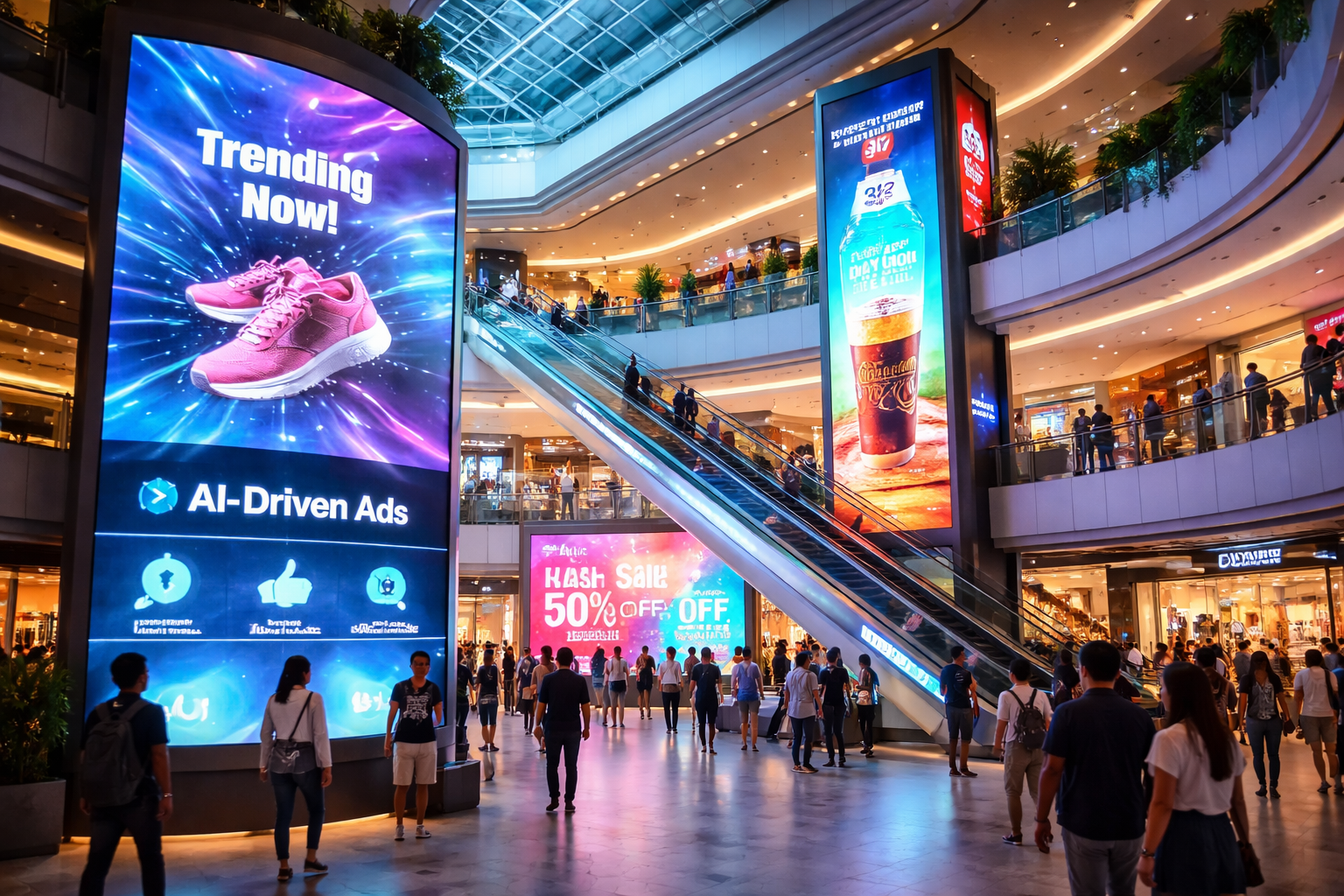
The Digital Out-of-Home (DOOH) industry is evolving faster than ever. With the rise of artificial intelligence, programmatic buying, real-time data analytics, and smart city infrastructure, DOOH is no longer just a digital billboard — it’s a dynamic, measurable, and performance-driven advertising channel.
Industry platforms like Media4Growth and Media4Exchange consistently highlight one key message: DOOH is becoming smarter, automated, and more accountable.
In 2026, brands are no longer asking “Should we invest in DOOH?” — they’re asking “How do we optimize DOOH with data and AI?”
The Rise of AI in DOOH Advertising
Artificial Intelligence is playing a central role in transforming outdoor media. AI-powered systems now analyze:
-
Real-time traffic flow
-
Weather conditions
-
Audience demographics
-
Consumer behavior patterns
-
Mobile data signals
This allows advertisers to serve contextual ads based on location, time of day, or even environmental triggers. For example:
-
A beverage brand can display cold drink ads when temperatures rise.
-
A quick-service restaurant can promote lunch combos during peak traffic hours.
-
Retail brands can trigger offers based on nearby footfall density.
AI removes guesswork and improves relevance — increasing engagement and conversion potential.
Programmatic DOOH: Automation Meets Outdoor Media
Programmatic advertising has already transformed digital marketing. Now it’s reshaping outdoor media.
Programmatic DOOH allows brands to:
-
Buy ad inventory in real-time
-
Target specific audiences
-
Adjust creatives dynamically
-
Optimize campaigns based on live performance data
Instead of booking a billboard for 30 days blindly, advertisers can now run campaigns during high-impact time slots only. This improves ROI and reduces media wastage.
In 2026, major urban markets in India, the Middle East, the US, and Europe are rapidly adopting programmatic DOOH platforms. Media owners are integrating DSPs (Demand Side Platforms) to automate inventory sales — making outdoor media as flexible as digital ads.
Data-Driven Measurement & Analytics
One of the biggest challenges in traditional OOH was measurement. Brands struggled to track exact ROI.
Now, with mobile location data, sensors, and AI-powered analytics tools, DOOH campaigns provide measurable insights such as:
-
Impressions based on real mobility data
-
Audience dwell time
-
Footfall attribution
-
Store visit lift
-
Brand recall metrics
Advanced attribution models connect DOOH exposure with mobile conversions. For retail brands, this means measuring how many users saw the ad and visited the store within 24–72 hours.
This accountability is why performance marketers are now allocating more budget toward DOOH.
Integration with Omnichannel Marketing
Modern DOOH campaigns are not isolated. They integrate with:
-
Social media ads
-
Mobile push notifications
-
Search retargeting
-
Connected TV
-
QR code interactions
For example, a consumer who sees a DOOH ad may later receive a retargeted ad on Instagram or Google. This cross-channel strategy increases brand recall and purchase intent.
Brands are using QR codes, NFC technology, and augmented reality to bridge offline and online engagement — making DOOH interactive rather than static.
Smart Cities & Connected Screens
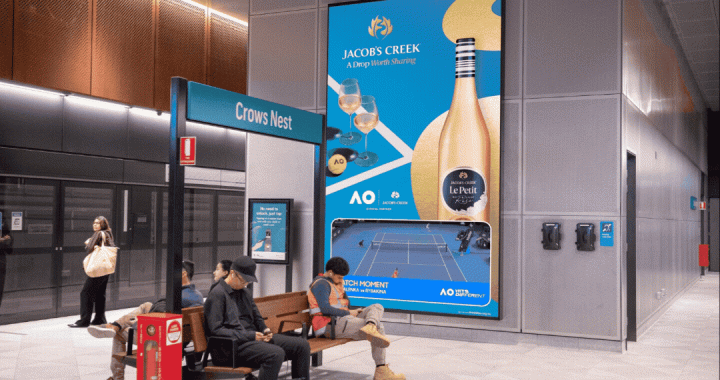
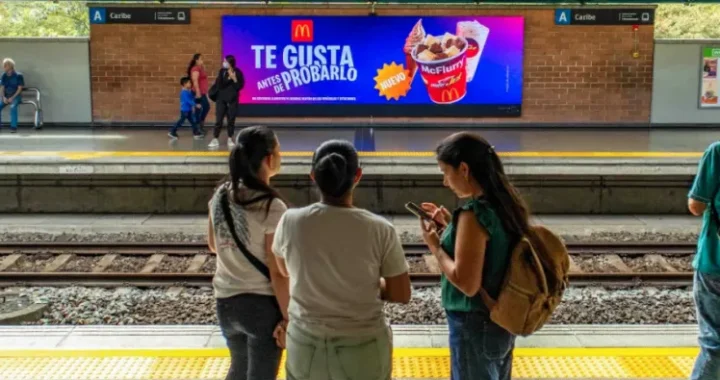
The expansion of smart cities is accelerating DOOH growth. Digital screens in:
-
Airports
-
Metro stations
-
Malls
-
Bus shelters
-
Highways
-
Commercial complexes
are now connected to centralized content management systems.
With 5G connectivity and IoT integration, content updates happen instantly across multiple locations. This allows brands to execute nationwide campaigns in seconds.
As urban infrastructure becomes more connected, DOOH networks become more powerful.
Sustainability & Energy Efficiency
Another key trend shaping DOOH in 2026 is sustainability.
New LED technologies consume less power. Some digital billboards are solar-powered. Smart brightness adjustment reduces energy usage during night hours.
Brands are also using DOOH to promote sustainability messaging — aligning outdoor campaigns with ESG goals.
Eco-friendly outdoor advertising is becoming both a technological shift and a branding advantage.
What This Means for Media Owners & Advertisers
For media owners:
-
Invest in programmatic integration
-
Upgrade screens to smart, data-enabled systems
-
Provide transparent analytics dashboards
For advertisers:
-
Focus on contextual creative
-
Use real-time triggers
-
Integrate DOOH into omnichannel strategies
-
Track measurable KPIs beyond impressions
Final Thoughts
The future of DOOH is intelligent, automated, measurable, and connected.
Artificial intelligence, programmatic technology, and real-time analytics are redefining how brands use outdoor media. What was once considered a traditional awareness medium is now a high-performance advertising channel.
For platforms like Dooh Digital covering industry updates, trends, and innovations, staying ahead of AI, programmatic growth, smart city expansion, and sustainability shifts will be key to capturing organic traffic and authority in the OOH ecosystem.
The next phase of DOOH isn’t just digital — it’s data-driven, dynamic, and deeply integrated into the modern marketing landscape.