How a 3D DOOH Campaign Increased Brand Recall by 38%: Real Campaign Analysis

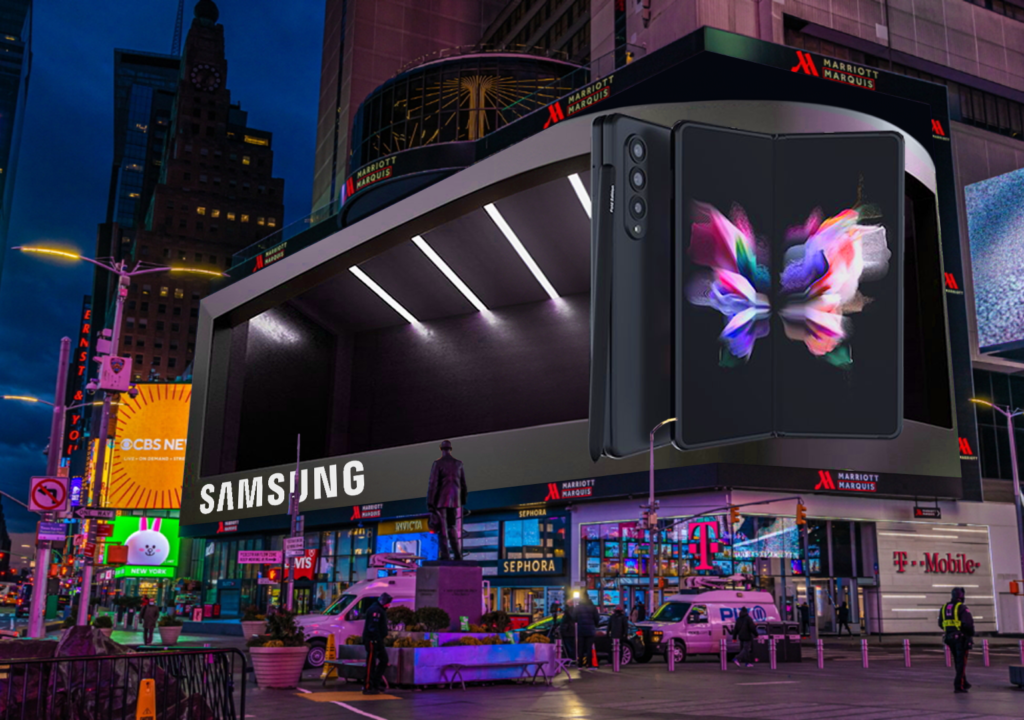
If you’ve walked through any major shopping district or corporate hub recently, you’ve probably seen people doing something that used to look ridiculous: standing on a sidewalk, completely still, holding up their phones to film a giant billboard. They aren’t filming just any billboard, though. They’re watching things like a luxury car seemingly breaking through the glass screen, or a giant product leaping out over the traffic below. This is the magic of 3D Anamorphic DOOH (Digital Out-of-Home).
For years, marketers have universally agreed that these massive, forced-perspective screens look incredibly cool and generate great social media buzz. But in our industry, “cool” doesn’t keep the lights on—data does. A major, comprehensive industry study titled *Science in Motion*—conducted by Vistar Media in partnership with Omnicom Media Group and JCDecaux—finally put some hard numbers behind the spectacle. Testing various creative formats head-to-head against a control group, the data revealed a massive milestone: running a 3D DOOH campaign generated an immediate 38% uplift in aided ad recall.**
Even more staggering? The study found that 3D motion formats are **67% more effective at building overall brand awareness** than traditional setups without motion.
Here is a real-world look at how the psychology works, what the data actually means, and how you can apply these insights to your next outdoor campaign.
The Methodology: How They Measured True Attention
Before looking at the numbers, it’s important to understand *how* this data was gathered, because it wasn’t a standard, artificial focus group.
The researchers tracked over 7,500 everyday consumers. Instead of priming them by saying, *”Hey, look at this advertisement and tell us what you think,” the participants simply watched realistic footage of a person walking through a normal outdoor city environment.
Incidental Exposure ➔ Distraction-Free Walking ➔ Post-View Survey ➔ 38% Metric Discovery
The DOOH screens were visible in the background, exactly how you or I would encounter them during a morning commute. The exposure was entirely incidental. This means the 38% spike in brand recall wasn’t manufactured in a lab; it happened because the 3D creative naturally hijacked the human brain’s focus in a crowded environment.
Why 3D Triggers the Brain (The Neuro-Marketing Play)
Why does a 3D anamorphic display outperform standard video so drastically? It comes down to basic evolutionary biology and neuromarketing principles.
1. Breaking the Visual Schema
Our brains are highly efficient pattern-recognition machines. When you walk down a busy street, your brain automatically filters out flat, rectangular shapes because it expects them to be standard signs or windows. A 3D anamorphic display uses a forced-perspective illusion (usually on a curved or corner LED screen) to create depth. When an object suddenly appears to break that physical boundary, it violates your brain’s expectations, forcing you to look.
2. Low-Distraction Dwell Time
In a typical Tier 1 metro or high-footfall zone, consumers are completely glued to their smartphones. The *Science in Motion* data highlights that 3D formats are uniquely successful at pulling eyes away from mobile devices. When people are waiting at a transit terminal or walking through a premium commercial block, a 3D visual converts passive wait time into highly engaging entertainment.
Real Campaign Insights: The Hidden Value of the Screen
While the 3D statistics are impressive, the study dropped another major insight that completely changes how we view media planning: Static creatives on digital screens recorded an identical 38% uplift in aided ad recall.
This sounds counterintuitive at first. How can a static image match a 3D illusion in basic recall?
The takeaway here is that the physical real estate itself does the heavy lifting. The sheer quality of modern, ultra-high-definition LED displays, combined with prime, high-traffic positioning, provides immense baseline value.
Static/Subtle Motion works exceptionally well for broad, cost-effective reach and clear product messaging. 3D Anamorphic Motion is your heavy hitter for long-term brand memorability, emotional resonance, and top-of-mind awareness (TOMA).
How to Execute a High-Recall 3D Campaign
If you want to move past standard video loops and tap into these high-recall metrics, your execution strategy needs to follow a precise framework:
1. Nail the Sweet Spot (The Angle)
Anamorphic 3D relies heavily on geometry. The illusion looks completely real from a specific vantage point—usually a corner intersection where a viewer can see two sides of a curved screen simultaneously. When planning your media buy, prioritize curved corner screens at major traffic bottlenecks or pedestrian plazas.
2. Lean Into “Emotional Anchoring”
The study revealed an interesting demographic quirk: while younger audiences (ages 18–34) respond incredibly well to fast, high-motion formats, 3D creatives showed exceptional performance among older demographics (ages 50–65)** for building spontaneous recall. If you are marketing a premium asset, a luxury automotive brand, or a high-end consumer product, 3D provides an elevated sense of prestige that resonates across every age bracket.
3. Connect the Offline-to-Online (O2O) Loop
A great 3D billboard doesn’t stop working when the commuter walks away. Because these setups are inherently shareable, progressive brands are embedding quick interactive elements—like contextual QR codes or custom social media handles—into the final seconds of the animation loop. This effortlessly converts physical, real-world awe into direct digital traffic and measurable online engagement.
Final Thoughts
The data from the latest research confirms what forward-thinking marketers have suspected: outdoor advertising is no longer just a passive awareness channel. With a 38% jump in brand recall and a 67% boost in overall awareness, 3D DOOH has proven it can cut through modern digital noise like almost nothing else.
If you are mapping out your upcoming regional or national campaign layouts, don’t just budget for static real estate. By taking your creative assets into the third dimension, you stop paying for simple, ignored impressions and start investing in unmissable consumer memory.