DOOH in India: Explosive Growth Ahead

India’s Digital Out-of-Home advertising sector is genuinely one of the fastest-growing DOOH markets in the world — that part of the story holds up under scrutiny from multiple independent research firms. What’s less consistent is exactly how big that market is today and how big it will be by 2030. Depending on which research house you read, India’s DOOH market is worth anywhere from roughly $280 million to well over $2 billion right now, with 2030 forecasts ranging from $300 million to over $6 billion. That’s not a typo, and it’s not one firm being sloppy — it comes down to how each analyst defines “DOOH,” what they include (screens only? content? programmatic platforms? adjacent smart-city infrastructure?), and which methodology they use to build the estimate. For media buyers and industry watchers, understanding why the numbers diverge is more useful than picking whichever figure sounds most impressive.
What the Research Firms Actually Say
Here’s a transparent look at some of the more frequently cited projections, rather than blending them into a single misleading composite:
MarkNtel Advisors puts India’s DOOH-specific market at around USD 284 million in 2024, projected to reach USD 620 million by 2030, growing at roughly 14% CAGR from 2025-2030.
IMARC Group takes a broader view of the category, valuing India’s digital OOH advertising market at USD 2.43 billion in 2025, projected to reach USD 6.41 billion by 2034 at an 11.39% CAGR. The far larger base figure here suggests IMARC is capturing a wider slice of adjacent digital signage and infrastructure than the narrower DOOH-only estimates.
Mordor Intelligence models total India OOH-and-DOOH spend (not DOOH alone) at USD 519.93 million in 2025, forecast to reach USD 656.13 million by 2030 — a modest 4.76% CAGR for the combined category. Within that total, static OOH still held 68% of 2024 revenue, while Digital OOH specifically is projected to grow at 7.2% CAGR, reaching around USD 300 million by 2030.
Grand View Research projects India’s digital out-of-home market will reach USD 630 million by 2030, growing at roughly 13.8% CAGR from 2025, making India the fastest-growing DOOH market in the Asia Pacific region.
The takeaway: narrower, DOOH-specific estimates (Markntel, Mordor’s DOOH segment, Grand View) tend to cluster in the $600–650 million by 2030 range with CAGRs of roughly 7–14%. Broader estimates that fold in adjacent digital signage infrastructure (IMARC) land dramatically higher. Neither is “wrong” — they’re measuring different things, and any credible planning should specify which definition it’s working from.
The Structural Growth Drivers That All Sources Agree On
Despite the divergence in total market size, the underlying growth drivers show up consistently across every research house:
Transit and airport media are the standout performers. Mordor Intelligence notes Transit media is forecast to grow at an 8.3% CAGR, outpacing billboards, while airports capture the fastest growth at a 9.7% CAGR, driven by metro rail expansion, airport privatization, and smart-city street-furniture upgrades.</cite> The same report points out a genuinely striking infrastructure statistic: India is adding roughly 6 kilometers of new metro track every month, converting greenfield infrastructure into incremental advertising inventory that commands premium CPMs.
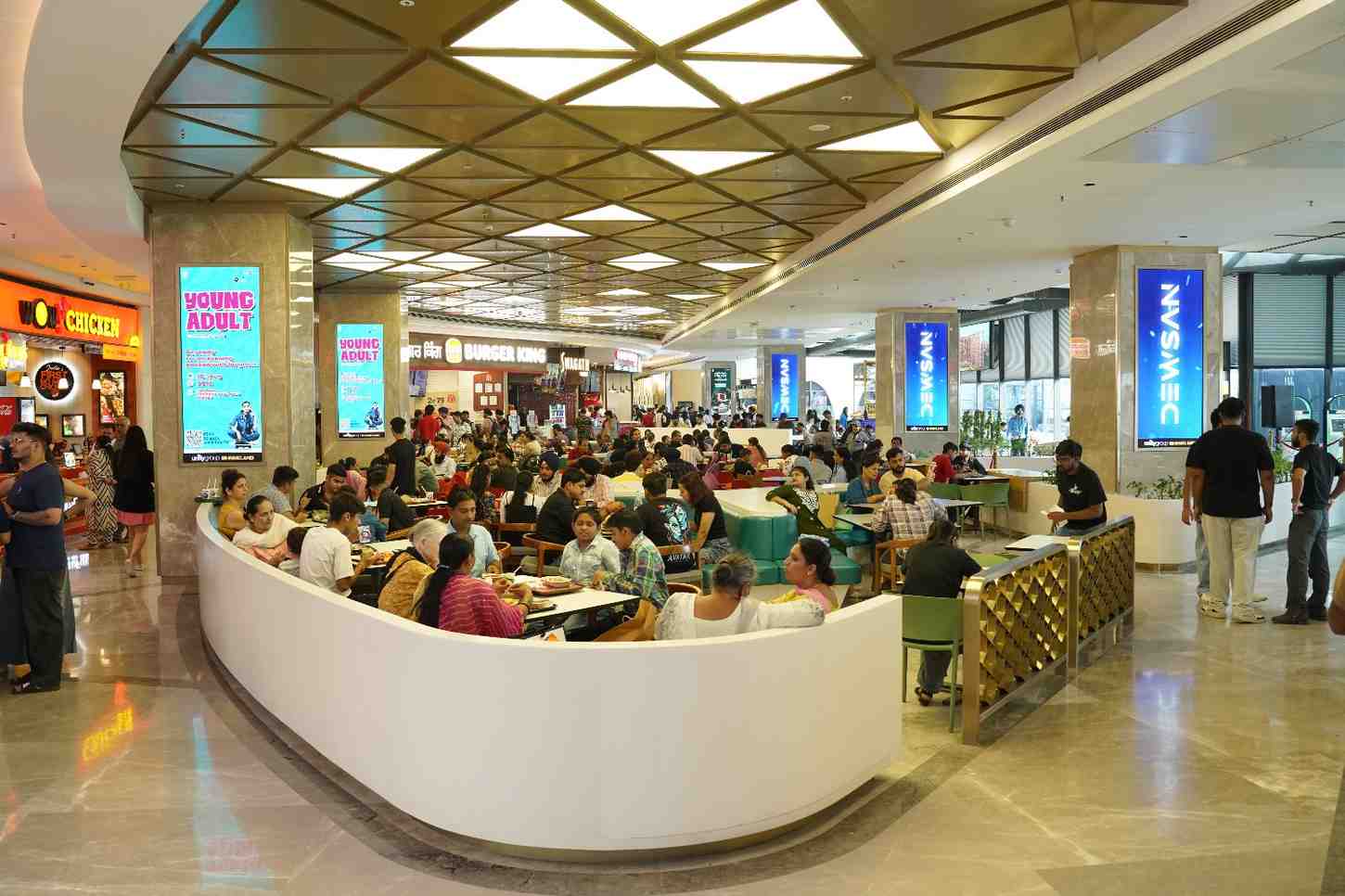
Retail and healthcare are the leading end-user verticals. Retail and Consumer Goods led with 30% of 2024 spending, while Healthcare and Pharma is the fastest-growing end-user segment, forecast at a 7.2% CAGR. MarkNtel’s research similarly found Retail & Consumer Goods holds around 40% of the total India DOOH market</cite>, reflecting how heavily mall and storefront screen placements dominate current spend.
Screen count is already substantial. One industry estimate puts India at nearly 185,000 DOOH screens currently, with 16% of those being large-format (60-inch or larger) installations across metro, malls, airports, and highways.
Programmatic buying and real-time analytics are the clearest technology shift underway. Multiple sources point to the same mechanism: <cite index=”23-3″>programmatic advertising uses data and technology to automate the buying and selling of ad space, ensuring ads reach the right audience at the right time, while real-time analytics allows advertisers to adjust campaigns on an ongoing basis. This is less a 2030 prediction and more a trend already underway — it’s the “how” behind rising DOOH CPMs, not a speculative future feature.
What’s Genuinely Still Speculative
It’s worth separating what’s backed by current deployment data from what remains a forward-looking bet:
- AI-driven hyper-personalization and real-time geo/weather-based bidding are technically feasible today and already used in more mature DOOH markets (Western Europe, parts of the U.S.), but large-scale rollout across Indian inventory is still early-stage rather than dominant.
- AR/VR interactive kiosks exist in pilot form at select airports and malls but aren’t yet a meaningful share of total inventory — treat 2-3x engagement claims for these formats as directional rather than market-representative until broader deployment data exists.
- Blockchain-verified impression measurement is discussed frequently in industry conference circuits but has limited public evidence of at-scale commercial deployment in the Indian market specifically.
None of these are unrealistic — they’re simply further along the adoption curve in forecasts than in actual current deployment, and that distinction matters for anyone building a media plan around them today versus five years from now.
What This Means for Advertisers and Planners
- Ask which market definition a stat is using before comparing it to another source. A “$2 billion market” claim and a “$600 million market” claim aren’t necessarily contradictory — they may simply be measuring different scopes of inventory.
- Transit and airport inventory is the highest-conviction growth bet across every research house, driven by verifiable, ongoing infrastructure expansion rather than speculative technology adoption.
- Healthcare and pharma DOOH is worth watching closely as one of the fastest-growing verticals, consistent with the broader global trend toward point-of-care and venue-based DOOH.
- Retail remains the anchor category today, but its growth rate is more moderate than transit and healthcare — useful context for anyone weighing where incremental ad dollars are shifting.
India’s DOOH growth story doesn’t need inflated numbers to be compelling — the structural drivers (metro and airport expansion, programmatic adoption, retail and healthcare demand) are well documented and consistent across independent research. The smartest approach for anyone using these figures — whether in a pitch deck or a planning document — is to cite a specific source and definition rather than blending conflicting estimates into a single, unsupportable number.