AI Content Ownership and Copyright: Who Really Owns AI-Generated Content?

Artificial Intelligence is transforming the way content is created. Today, AI tools can generate images, videos, blog posts, advertisements, music, voiceovers, and even complete marketing campaigns within seconds. While this technology is helping businesses work faster and reduce production costs, it has also created a major legal and ethical question:
Who owns AI-generated content, and who holds the copyright?
This question is becoming increasingly important as brands, creators, agencies, and tech companies rely more on AI-generated work for commercial use.
Understanding AI-Generated Content
AI-generated content refers to any text, image, video, audio, or design created with the help of artificial intelligence tools. Platforms powered by AI learn from massive datasets collected from the internet, including human-created artworks, articles, photographs, music, and videos.
The AI itself does not “think” like humans. Instead, it predicts patterns and generates outputs based on the information it has learned during training.
Because of this process, ownership becomes legally complicated.
Can AI Own Copyright?
Currently, in most countries, AI cannot legally own copyright because copyright law is designed for human creators. AI is considered a tool, not a legal person.
This means:
- AI cannot hold intellectual property rights
- AI cannot sign contracts
- AI cannot claim ownership
Most legal systems still require human creativity and human involvement for copyright protection.
Who May Own AI-Generated Content?
Ownership often depends on several factors:
1. The User or Creator
In many cases, the person using the AI tool may own the final content if they:
- Provide detailed prompts
- Edit the output
- Add creative direction
- Use the content commercially
For example, if a marketer uses AI to create an ad campaign and then customizes it for a brand, the marketer or company may claim ownership.
2. The AI Platform
Some AI companies include ownership terms in their policies. Certain platforms allow users to fully own generated content, while others may keep partial rights or usage permissions.
This is why businesses should always read the terms of service before using AI-generated assets commercially.
3. Original Human Creators
One of the biggest copyright controversies is whether AI systems were trained using copyrighted human-created material without permission.
Artists, photographers, writers, and musicians argue that:
- Their work was used to train AI models
- AI-generated outputs may imitate their styles
- Their intellectual property is being commercially exploited
This issue has already led to lawsuits and legal debates globally.
Is AI Content Truly Original?
This is another major challenge.
AI creates content by learning patterns from existing data. Because of this:
- Some outputs may accidentally resemble copyrighted work
- AI-generated images may imitate artistic styles
- Text outputs may resemble existing articles or phrases
As a result, businesses using AI-generated content face potential copyright risks if proper checks are not performed.
Copyright Laws Are Still Evolving
Governments and legal systems worldwide are still trying to define how AI-generated content should be regulated.
Different countries currently have different approaches:
- Some require strong human involvement for copyright protection
- Others do not recognize AI-generated work as protected content
- Some are exploring new laws specifically for AI-created media
As AI adoption grows, global copyright frameworks are expected to change significantly over the next few years.
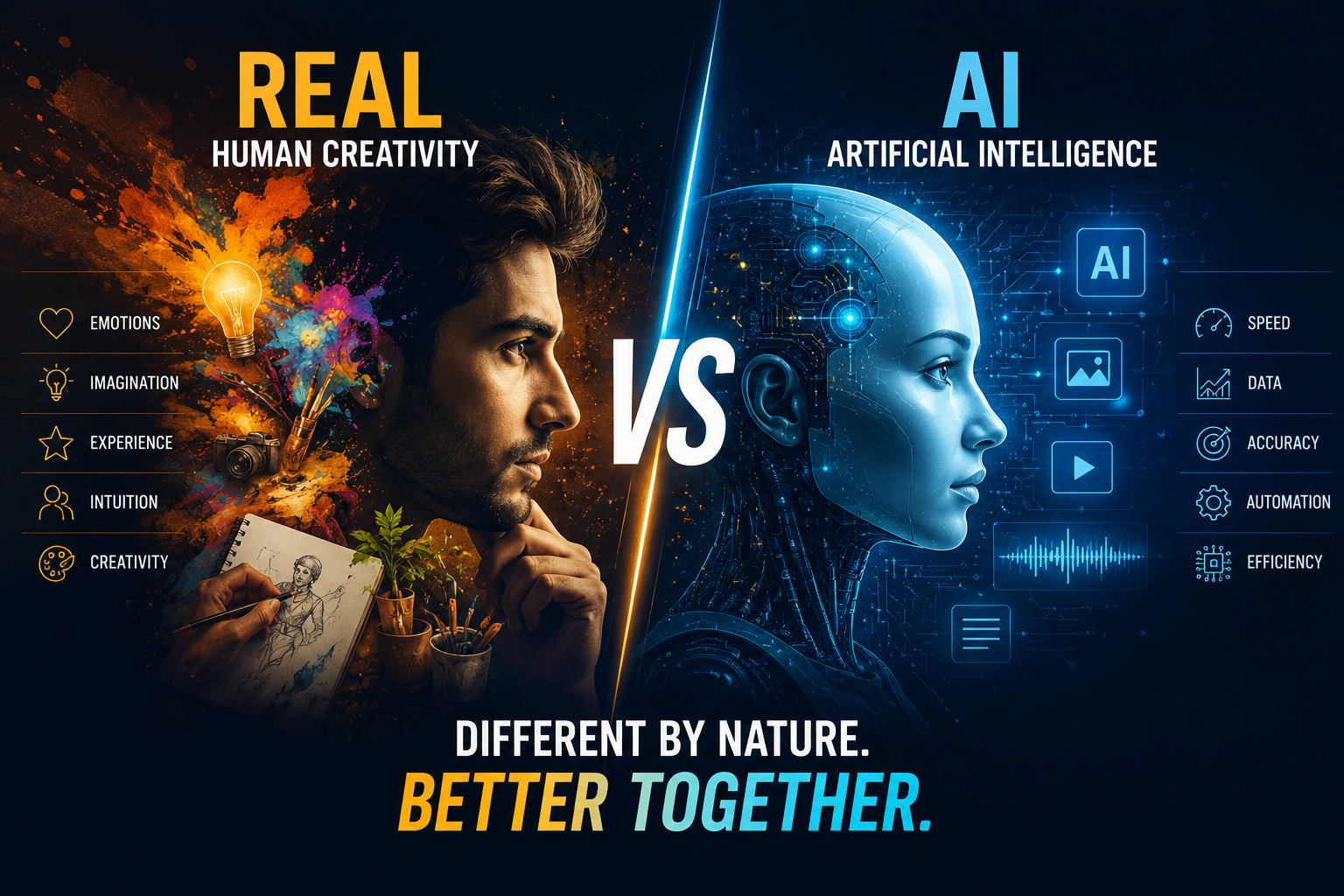
The Importance of Human Creativity
Even with advanced AI tools, human creativity remains essential.
Humans still provide:
- Original ideas
- Emotional storytelling
- Brand understanding
- Ethical judgment
- Strategic thinking
AI can generate content quickly, but humans give it meaning, purpose, and authenticity.
Final Thoughts
AI is reshaping the future of content creation, but ownership and copyright questions remain unresolved. While AI can assist in generating content, the legal ownership often depends on human involvement, platform policies, and copyright laws.
For businesses and creators, the safest approach is to:
- Use AI responsibly
- Review platform licensing terms
- Add human creativity and editing
- Avoid copying existing copyrighted material
The future of content creation will likely be a collaboration between AI efficiency and human originality. Until laws become clearer, understanding AI copyright and ownership will remain one of the biggest challenges in the digital world.