JOLT Launches Australia’s First Vehicle-Triggered DOOH Campaign with BMW Group

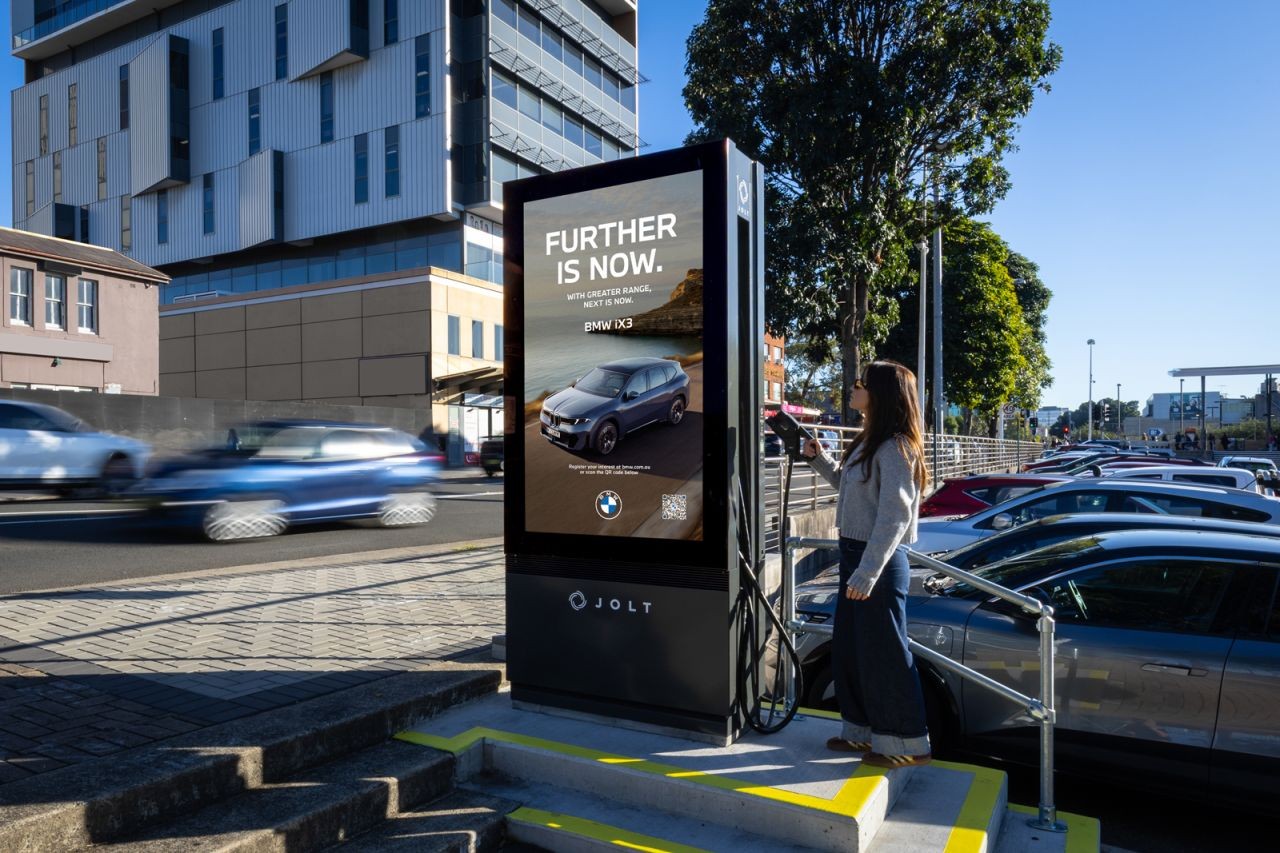
Electric vehicle charging infrastructure is evolving into something beyond a utility play, and a new campaign from JOLT is putting that shift on display. The company has launched what it’s calling Australia’s first vehicle-triggered Digital Out-of-Home campaign, partnering with BMW Group Australia, media agency Atomic 212º, and creative agency Scooter to turn the act of charging an EV into a real-time, personalized brand moment.
How the Technology Works
The mechanic behind the campaign is what sets it apart from conventional DOOH placements. When an eligible EV driver plugs into a JOLT charging station, the action triggers a BMW creative takeover on the surrounding screens. Rather than relying on static, pre-scheduled content, the campaign serves complementary messaging simultaneously across both the DOOH screens and the JOLT app, with creative dynamically adjusting in real time based on weather and location. The result is a format that blends the broad physical reach of traditional out-of-home advertising with the contextual precision typically reserved for digital channels — effectively giving BMW broadcast-level visibility paired with the kind of relevance and timing usually associated with programmatic or app-based targeting.
Why the Charging Moment Matters
JOLT’s pitch centers on a simple but increasingly valuable insight: charging stations create a rare window where a customer has both genuine time and genuine attention. Unlike a quick fuel stop or a fleeting glance at a billboard from a moving car, plugging in an EV typically means standing still for several minutes — a captive, undistracted moment that few other physical media environments can replicate.
For BMW, that translates into an opportunity to reach EV-relevant audiences at precisely the moment they’re engaging with charging infrastructure, with messaging that can flex based on real-world context like local weather conditions, rather than running the same static creative regardless of circumstance.
A Shift From Location-Based to Moment-Based Media
The campaign reflects a broader direction many in the DOOH industry have been pushing toward: media planning built around customer moments rather than simply customer locations. Where traditional out-of-home has long been valued primarily for footfall and dwell time at a fixed site, this execution adds a behavioral trigger into the mix, activating creative specifically when a relevant action — in this case, plugging in an EV — actually occurs.
That kind of trigger-based, contextually responsive advertising sits at the intersection of programmatic logic and physical media, a space that’s gaining increasing attention from advertisers looking to make traditionally “dumb” outdoor formats smarter and more accountable.
What It Signals for the Industry
As EV adoption continues to climb across Australia and globally, charging infrastructure is increasingly being eyed by media owners as untapped real estate for advertising — not just as a convenience for drivers, but as a genuine media channel in its own right. JOLT’s collaboration with BMW Group, Atomic 212º, and Scooter offers an early blueprint for how that infrastructure can be activated meaningfully, combining real-time data, location context, and behavioral triggers into a single coordinated campaign.
For an industry constantly searching for ways to prove DOOH’s relevance in an increasingly digital-first media mix, campaigns like this one suggest that the next wave of innovation may not come from bigger screens or better resolution, but from smarter triggers tied to genuine human behavior.
For daily updates on marketing, media, brands, technology, AI, and the startups shaping the advertising industry, stay with DoohDigital.com.