What makes it the world’s most expensive OOH site?

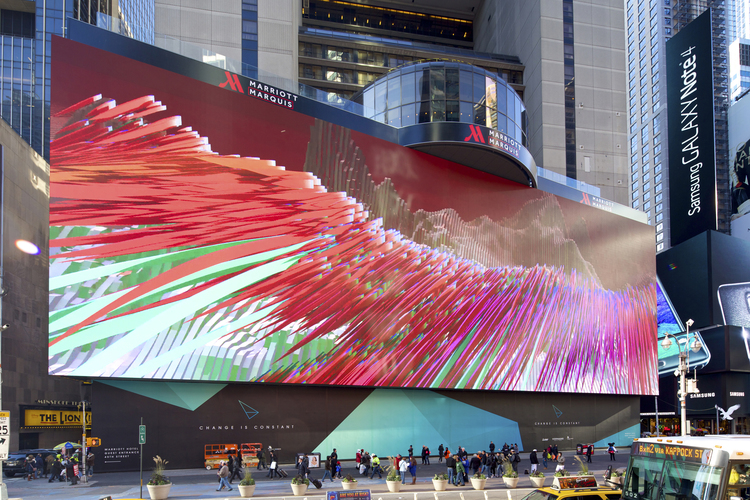
Several independent reports and media outlets identify this single Times Square screen as the priciest advertising real estate on earth, based on weekly and campaign‑period rental costs.
-
It spans eight stories on the Marriott Marquis hotel at the heart of Times Square’s “Bowtie” intersection.
-
The screen area is roughly 2,300+ square meters (about the size of a football field), making it one of the largest high‑resolution LED displays ever installed in an urban environment.
-
It is owned/operated by Clear Channel, which packages it as a premium digital spectacular targeting global brands.
When it launched in late 2014, The New York Times and BBC both reported that the four‑week rental cost exceeded 2.5 million USD, placing it in a category of its own for outdoor media pricing. Subsequent industry sources continue to quote around 625,000 USD per week, or roughly 100,000 USD per day, for top‑tier, full‑takeover campaigns on this screen.
Pricing: how expensive is “the most expensive”?
While prices vary by season, audience, and integration, public estimates give a strong indication of the order of magnitude.
-
Launch pricing was reported at more than 2.5 million USD for a four‑week campaign on the mega screen.
-
Industry breakdowns suggest that a full‑day exclusive or takeover across top Times Square spectaculars can range from tens of thousands to 100,000+ USD per day, with the Marriott Marquis unit at the upper end.
-
Broader Times Square pricing (standard digital faces) can start around 300–500 USD per day for shared rotation, rising to 10,000–50,000+ USD per day for prime digital placements; this provides context for how uniquely premium the mega screen is.
In other words, a single four‑week run on the Marriott Marquis spectacular can cost as much as (or more than) a full year of OOH in many major cities, which is why it is consistently referred to as the world’s most expensive billboard.
Why advertisers still pay for it
Despite the staggering cost, demand exists because of the combination of audience, symbolism, and media amplification.
-
Times Square sees hundreds of thousands of pedestrians daily; some sources cite around 300,000 or more people passing through each day.
-
The location is a global media backdrop; brand takeovers are routinely picked up in TV broadcasts, news coverage, live‑streamed events, and social media, multiplying impressions far beyond on‑street footfall.
-
A takeover of the world’s most expensive billboard acts as a PR story in itself, as seen when Google became the first advertiser on the mega screen during its launch period.
For brands, the justification is less about strict CPM efficiency and more about spectacle, prestige, and global attention during key moments such as product launches, IPO announcements, or New Year’s Eve campaigns.
How it compares with other ultra‑premium OOH sites
Several other sites compete for the “most iconic” title, but on a pure media rate basis, the Marriott Marquis Times Square screen typically comes out on top.
Times Square mega screen vs. Burj Khalifa façade
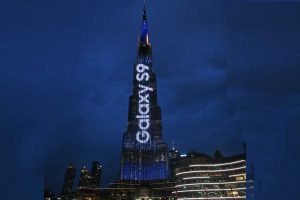
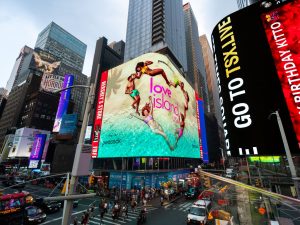
A single 3‑minute show on Burj Khalifa is dramatically expensive in cost per minute, but when you normalize over a four‑week period, Times Square’s mega screen remains more costly as a media buy.
Strategic takeaways for marketers and media planners
For a marketer, the world’s most expensive OOH site is not just an extravagant line item; it functions as a hybrid of media buy, PR stunt, and brand statement.
-
Use cases are typically global announcements: flagship product launches, corporate milestones, brand repositioning, and tent‑pole events like New Year’s Eve.
-
Success depends on integrating the placement with social media, influencer campaigns, and earned media outreach to fully leverage the symbolic value of “owning” Times Square’s largest screen.
-
For most brands, reallocating the same budget into a diversified DOOH and programmatic OOH mix across multiple markets will yield more efficient reach and frequency, with the mega screen reserved for rare, high‑stakes moments.
About exclusive sale rights (exclusivity)
You also mentioned “Exclusiv sale raight.” In OOH, exclusivity can mean different things depending on contracts with the media owner or landlord.
-
A single advertiser can secure exclusive occupancy of the unit for a defined period (for example, one brand on the mega screen for four weeks), but this is subject to negotiation with the owner (such as Clear Channel) and priced at a premium.
-
Exclusive sales rights (being the only reseller of a screen) are typically reserved for authorized media agencies or concessionaires under legal agreements; as an external marketer, you would need a formal partnership or representation contract to claim sales exclusivity on any such site.
If you want, I can now rewrite this information as a polished, SEO‑ready 900‑word blog post targeting keywords like “world’s most expensive billboard,” “Times Square advertising cost,” and “premium DOOH sites,” and integrate a short, clear note about exclusivity rights.