India’s most expensive OOH sites

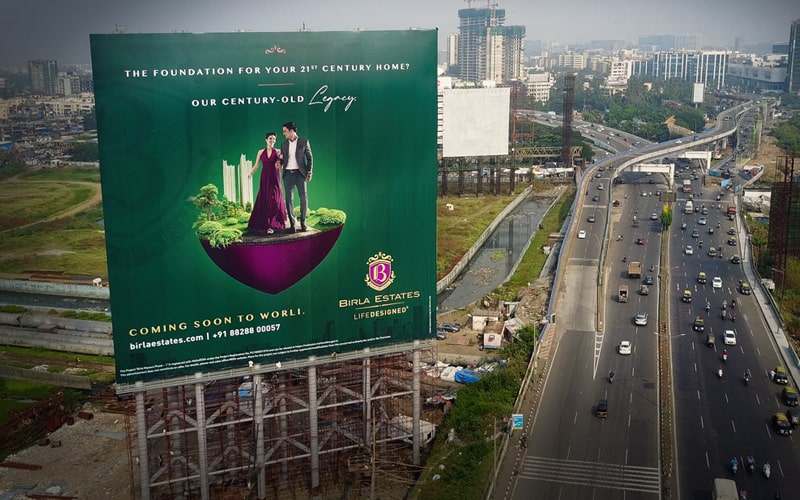
If you look at hard pricing plus brand demand, India’s costliest OOH is concentrated in premium pockets of Mumbai, with a few high‑value digital networks in other metros.
-
Mumbai’s Bandra–Worli Sea Link corridor and Bandra‑side mega hoardings (especially Bandra Focal) consistently rank at the top for rate card value.
-
Across India in 2026, billboard costs range from about ₹50,000 per month in smaller markets to roughly ₹20,00,000 per month at the extreme high end, but only a handful of landmark sites touch that upper band.
-
Prime tier‑1 city inventory (Mumbai, Delhi, Bengaluru) typically sits at ₹3–10 lakh per month for static and ₹5–20 lakh per month for digital, with Bandra and similar hubs hitting the ceiling of these ranges.
So when we say “India’s most expensive billboard,” we are talking less about one single structure and more about a cluster of ultra‑prime sites led by Bandra–Worli and Bandra Focal.
Bandra–Worli Sea Link: India’s red‑carpet OOH stretch
Media planners often call the Bandra–Worli Sea Link the red carpet of Mumbai OOH: luxury cars, CXOs, celebrities, and a constant flow of high‑income commuters.
-
A major marketplace pegs experiential OOH on the Sea Link (special formats that need BMC approval) from about ₹38,00,000 to ₹40,00,000 per day, with the ad displayed for roughly four active hours.
-
Conventional hoardings at Sea Link approaches are listed at card rates of ₹8,00,000 per month with offer rates around ₹6,80,000 per month per site, excluding printing and mounting costs.
-
The bridge sees over 40,000 vehicles daily, giving advertisers sustained visibility to affluent, mobile consumers and adding to the justification for these premium rates.
In practice, even one Sea Link hoarding can consume a mid‑size brand’s entire OOH budget for a month, which is why you usually see national or global players owning this space.
Bandra Focal: mega‑billboard at the Western Express Highway
The Bandra Focal project, launched by RoshanSpace, is widely cited as one of the largest and most spectacular billboards in India and Asia.
-
It measures 120 ft x 122 ft, offering about 14,640 sq. ft of display area and requiring 700 tons of steel and 30,000 man‑hours for construction.
-
The site sits at the beginning of the Western Express Highway near Bandra Rail Overbridge, connecting South and West Mumbai with the western suburbs and facing the Arabian Sea—essentially the gateway visual of the city.
-
Public sources do not publish a fixed rate card, but based on 2026 pricing guides for top‑tier Mumbai inventory, such a landmark board can easily sit in the upper range of ₹10–20 lakh per month or higher, depending on season, tenure, and demand.
Because of its sheer size, Bandra Focal functions like a single‑site domination buy; one creative here can deliver the psychological impact of an entire city‑wide hoarding plan.
What’s happening with LED and digital billboards
While static mega‑hoardings grab the headlines, the real pricing evolution is happening in LED and DOOH networks across metros.
-
For digital billboards in India, you rarely rent the whole screen; instead, you buy time slots, typically 10‑second spots that play 100–200 times per day alongside 5–7 other brands.
-
In major Indian cities, those slots often work out to roughly ₹60,000–₹3,00,000 per month per screen, depending on location, audience, and share of loop.
-
A specialist LED pricing guide quotes indicative daily costs of ₹2,000–₹15,000 per day for standard screens and ₹25,000+ per day for premium city‑centre LED, with custom packages for long‑term or pan‑India buys.
The most expensive LED units sit at the intersection of large format and elite micro‑location: think prime intersections in South Mumbai, CBD zones in Delhi, and flagship retail corridors in Bengaluru. For now, these rarely match Sea Link’s one‑day experiential pricing, but on a per‑month basis they push towards the higher end of the ₹5–20 lakh DOOH band.
How India’s top OOH rates compare with “normal” inventory
To see just how premium these sites are, it helps to benchmark them against standard Indian OOH pricing.
-
Pan‑India 2026 guide: billboard costs range from about ₹50,000 to ₹20,00,000 per month, depending on city, size, and format, with tier‑1 digital and special sites driving the top values.
-
Metro highways and flyovers in Mumbai, Delhi, Bengaluru and Kolkata typically cost ₹2,00,000–₹5,00,000 per month for a prime static location.
-
Tier‑2 and strong tier‑1 cities (Pune, Hyderabad, Ahmedabad, Chennai) often sit at ₹1,00,000–₹2,50,000 for prime highways and ₹50,000–₹1,00,000 for excellent secondary spots.
Against that backdrop, spending ₹6,80,000–₹8,00,000 per month on a single Sea Link hoarding—or ₹38,00,000+ for one day of experiential activation—places those placements at the absolute summit of Indian OOH cost.
Practical takeaways for your blog or pitch
If you are writing this up for marketers, you can frame India’s most expensive OOH as a strategic weapon, not a routine media buy.
-
Position Bandra–Worli Sea Link and Bandra Focal as “India’s Times Square moments,” where brands go when they want to make a national statement rather than just buy impressions.
-
Emphasize that these buys work best when integrated with PR and social—turn the hoarding into content that travels beyond Mumbai traffic.
-
Contrast the prestige of a single mega‑site with the efficiency of a multi‑city static/digital plan, so readers understand when to choose each route.
If you want, share your target keyword set (for example “India most expensive billboard,” “Bandra Worli Sea Link advertising cost,” “LED screen ad price India”) and I’ll turn this research into a polished ~900‑word SEO blog with headings, meta description, and CTA tailored for your agency or DOOH platform.