OOH vs DOOH Advertising: Which Delivers Better Returns

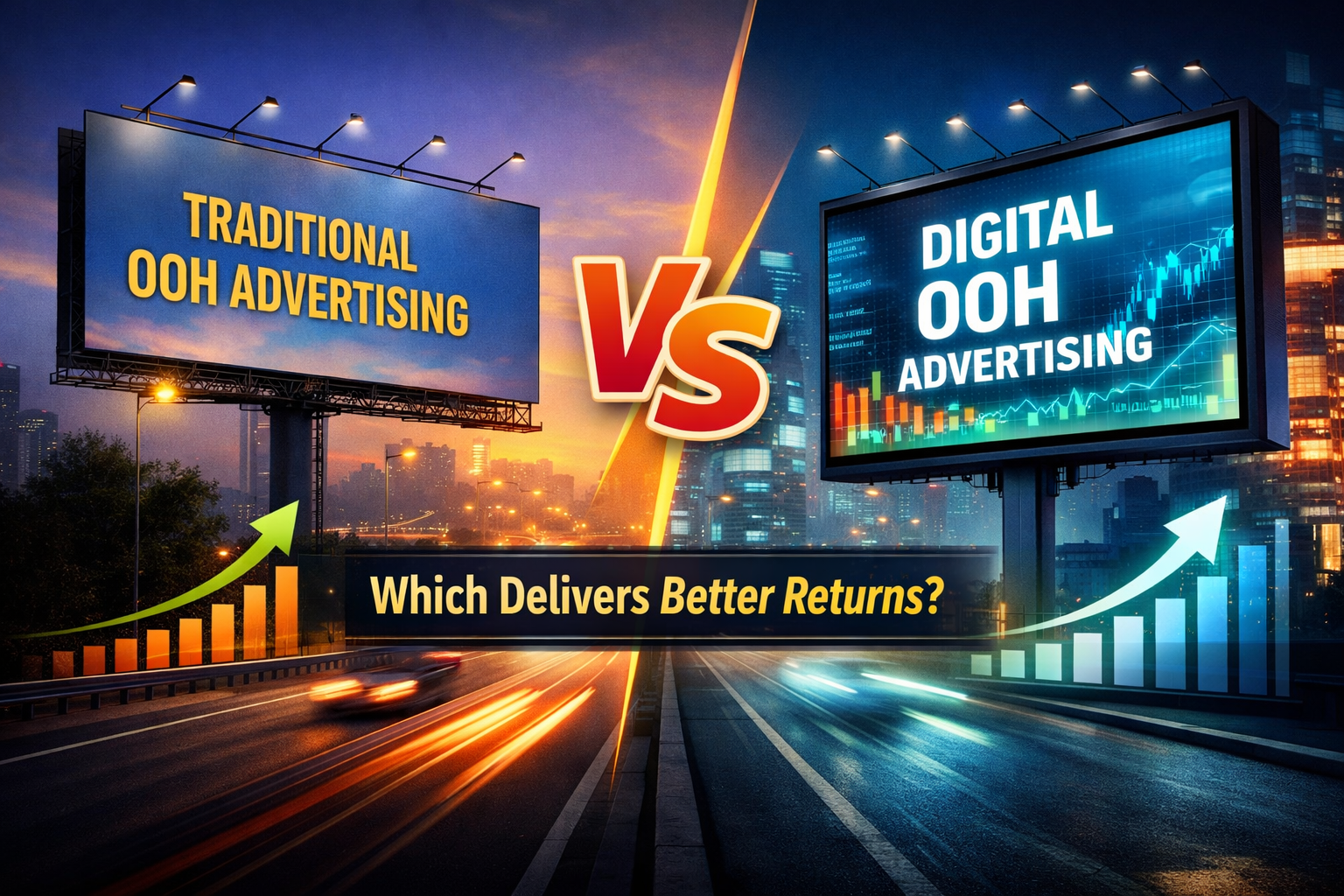
Out-of-Home (OOH) advertising has long been a cornerstone of brand visibility—billboards, hoardings, transit ads, and more. But with the rise of Digital Out-of-Home (DOOH), advertisers now have access to smarter, more measurable, and highly engaging formats.
The biggest question for marketers today is simple:
Which delivers better ROI—traditional OOH or DOOH advertising?
The answer isn’t one-size-fits-all, but understanding the differences can help brands allocate budgets more effectively.
Understanding ROI in OOH and DOOH
Return on Investment (ROI) in outdoor advertising is typically measured through:
- Brand awareness uplift
- Impressions and reach
- Engagement levels
- Conversion impact (direct or indirect)
- Cost efficiency over time
While both OOH and DOOH deliver strong visibility, their approach to ROI is fundamentally different.
Traditional OOH Advertising ROI
Strengths of OOH
Traditional OOH advertising—such as static billboards—continues to offer:
- Massive reach in high-traffic areas
- Cost-effective long-term visibility
- Strong local brand recall
- 24/7 exposure without interruption
For example, a highway billboard can generate millions of impressions over weeks at a relatively fixed cost.
Limitations of OOH ROI
However, OOH has some clear drawbacks when it comes to ROI measurement:
- No real-time performance tracking
- Limited audience targeting
- Static content (no updates once printed)
- Difficult to measure direct conversions
Verdict:
OOH delivers strong brand awareness ROI, but lacks precision and measurable performance metrics.
DOOH Advertising ROI
Why DOOH is Gaining Momentum
DOOH combines the power of outdoor media with digital technology, offering:
- Dynamic content (videos, animations, real-time updates)
- Programmatic ad buying
- Audience-based targeting
- Data-driven campaign optimization
ROI Advantages of DOOH
1. Higher Engagement Rates
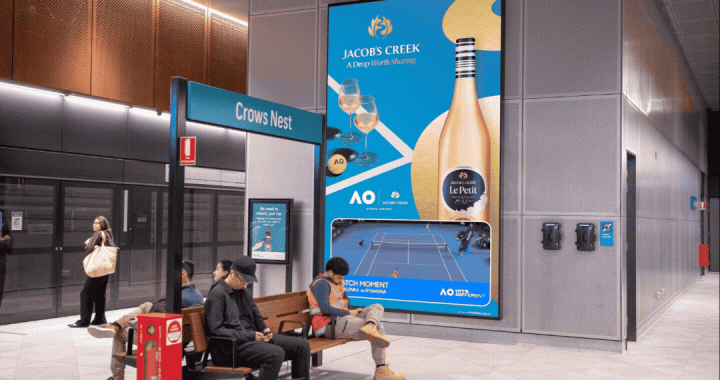
Moving visuals and interactive content grab more attention compared to static ads.
2. Real-Time Optimization
Campaigns can be updated instantly based on time, weather, or audience behavior.
3. Better Targeting
Ads can be shown based on location, demographics, and even time of day.
4. Measurable Performance
DOOH platforms provide data on impressions, dwell time, and audience interaction.
5. Flexible Budgeting
Brands can run shorter campaigns, test creatives, and optimize spending.
Limitations of DOOH ROI
- Higher initial cost compared to static OOH
- Limited availability in smaller towns
- Requires strong creative execution
Verdict:
DOOH delivers higher measurable ROI and engagement, especially for modern, data-driven campaigns.
| Factor | OOH Advertising | DOOH Advertising |
|---|---|---|
| Cost | Lower upfront | Higher but flexible |
| Reach | Very high | High (premium locations) |
| Engagement | Moderate | High |
| Targeting | Limited | Advanced |
| Measurability | Low | High |
| Flexibility | Static | Real-time updates |
| ROI Type | Awareness-focused | Performance + Awareness |
When to Choose OOH vs DOOH
Choose OOH When:
- You want long-term brand visibility
- Targeting a mass local audience
- Working with a limited budget
- Running simple awareness campaigns
Choose DOOH When:
- You need measurable campaign performance
- Targeting specific audiences or locations
- Running time-sensitive promotions
- Want high engagement and premium branding
The Hybrid Approach: Best ROI Strategy
In 2026, the smartest brands are not choosing between OOH and DOOH—they’re combining both.
A hybrid strategy allows:
- Broad reach via OOH
- Precision targeting via DOOH
- Consistent brand messaging across formats
For example:
A brand may use highway billboards for awareness and DOOH screens in malls for targeted engagement.
Future of Outdoor Advertising ROI
The future of ROI in outdoor advertising lies in:
- Programmatic DOOH
- AI-driven targeting
- Data integration with mobile and online campaigns
- Interactive and 3D outdoor experiences
As technology evolves, DOOH is expected to dominate in terms of performance-driven ROI, while OOH will continue to support mass visibility campaigns.
Conclusion
Both OOH and DOOH advertising offer unique advantages, but when it comes to ROI:
- OOH excels in cost-effective brand awareness
- DOOH leads in engagement, targeting, and measurable results
The real winning strategy is not choosing one over the other—but using both strategically to maximize impact.