How Programmatic DOOH is Claiming 25% of the Pie in 2026

For decades, Out-of-Home (OOH) advertising was a bit like a “set it and forget it” slow cooker. You printed a giant vinyl sheet, climbed a ladder, and hoped the right people drove past it for the next three months.
Fast forward to 2026, and the ladder has been replaced by an algorithm.
According to recent industry data, Programmatic DOOH is now projected to command 20–25% of all digital outdoor budgets. If you’re still buying screens based on “gut feeling” and zip codes, you’re missing the train—and the train probably has a programmatic screen on it anyway.
1. The Death of the “Static” Mindset
The jump to a 25% budget share isn’t just about flashy screens; it’s about flexibility. In a volatile economy, brands can no longer afford to lock in 90-day contracts for a single static message.
-
Instant Pivots: Did a competitor just launch a flash sale? With pDOOH, you can counter-message across 500 screens in minutes, not weeks.
-
Efficiency: You only pay for the impressions that matter. Why run a coffee ad at 11:00 PM when you could save that budget for the 7:00 AM commuter rush?
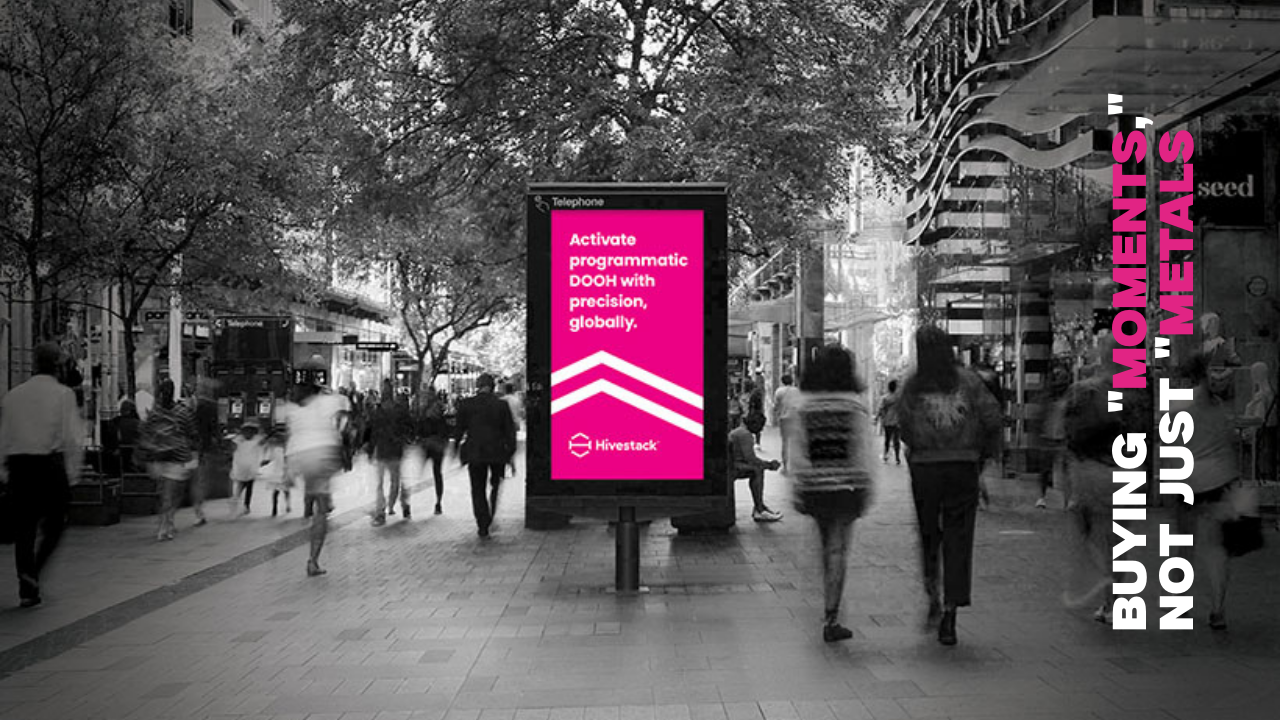
2. Buying “Moments,” Not Just “Metals”
The biggest shift in 2026 is the move from location-based buying to audience-based activation.
“Brands are no longer just buying outdoor locations; they’re buying audience moments.” — Anuj Bhandari, CEO of DGTOOHL.
By integrating mobile location data and IoT sensors, pDOOH platforms allow advertisers to trigger ads based on real-world signals:
-
Weather Triggers: A beverage brand triggers “hot chocolate” ads the second the temperature drops below 15°C.
-
Traffic Density: A car insurance brand increases its bid for roadside screens only when traffic is crawling, ensuring high dwell time.
3. The Return of Accountability
OOH was traditionally “data-dark.” You knew people saw your ad, but “how many” and “who” was mostly guesswork. pDOOH has brought the transparency of the web to the physical world. With verified billable impressions and real-time performance dashboards, the “OOH ROI” is no longer a myth.
4. The Winners of 2026
We’re seeing heavy investment from sectors that crave precision. Automotive brands like Jaguar Land Rover are using 3D anamorphic displays to target affluent travelers at Manipal or Delhi airports. Meanwhile, Q-commerce and Fintech brands are using Programmatic DOOH to drive “app-first” actions through QR codes and context-aware messaging.
The Bottom Line
As we move through 2026, the question isn’t whether Programmatic DOOH works—it’s whether your brand is agile enough to use it. With nearly a quarter of all DOOH spend now flowing through programmatic pipes, the “great digitisation” of our streets is complete.