Moving OOH Delivers Higher Reach and Better Campaign Efficiency, New Study Finds

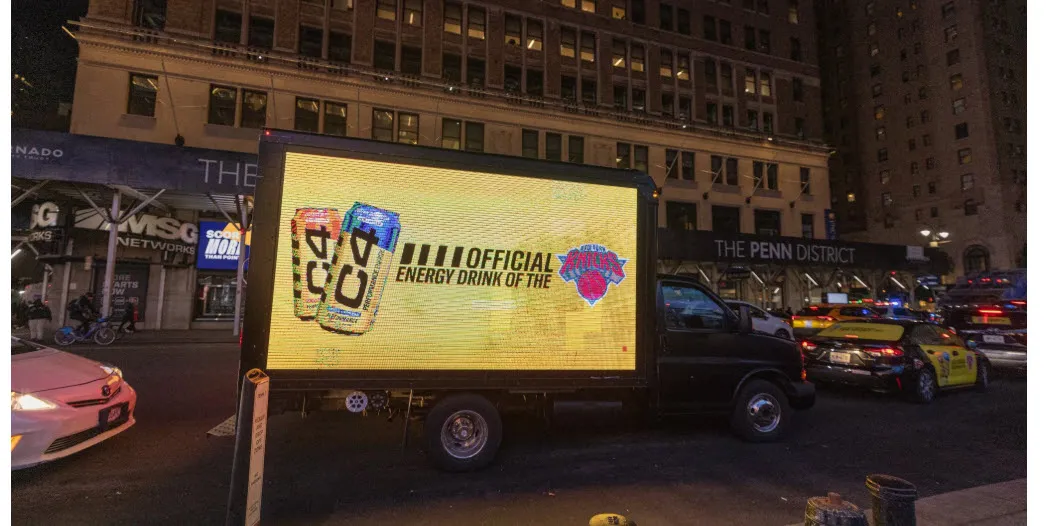
Firefly, in partnership with Reveal Mobile, has released a new white paper highlighting how Moving Out-of-Home (MOOH) advertising can significantly improve campaign reach and frequency efficiency compared to traditional stationary OOH formats.
Titled “The Amplifying Effect, Part II: Understanding How Moving Out-of-Home Expands Reach, Optimizes Frequency, and Improves Campaign Efficacy,” the report builds on the companies’ earlier 2025 research, which showed that combining stationary and moving OOH media boosted campaign performance by 50% to 100%.
The latest study focuses on how audience reach and impression frequency impact overall advertising effectiveness. According to the findings, moving OOH formats such as digital car top advertising help brands reach new audiences more efficiently while avoiding excessive repetition among the same viewers.
One of the report’s key insights revealed that Moving OOH campaigns produced up to 2.8 times greater growth in unique audience reach compared to the growth in impressions when layered onto stationary OOH campaigns.
The study also found that Firefly Digital Car Tops delivered between 60% and 80% higher unique reach than traditional static OOH formats while operating at similar impression volumes. Researchers noted that the mobility of the screens allows advertisers to engage audiences across multiple locations and travel patterns rather than relying on fixed viewing zones.
Another major takeaway involved campaign frequency optimization. The research showed that adding moving OOH helped shift exposure levels from heavily repeated impressions — often ranging between 5 and 19 exposures per viewer — toward a more effective frequency window of 3 to 8 exposures. This adjustment reduced audience overexposure while expanding campaign reach to net-new consumers.
The report further emphasized that integrating MOOH into media strategies can improve scalability without requiring a proportional increase in advertising spend, making campaigns more cost-efficient overall.
Researchers also explored the idea of a “saturation threshold,” where continuously serving impressions to the same audience begins to deliver diminishing returns. The findings suggest that advertisers may achieve stronger outcomes by prioritizing audience expansion before increasing message frequency.
As advertisers continue seeking more measurable and flexible out-of-home solutions, the study positions Moving OOH as an increasingly valuable channel for maximizing reach, balancing frequency, and improving overall campaign performance.