Wispr Flow Turns Bengaluru Traffic into Smart OOH Campaign

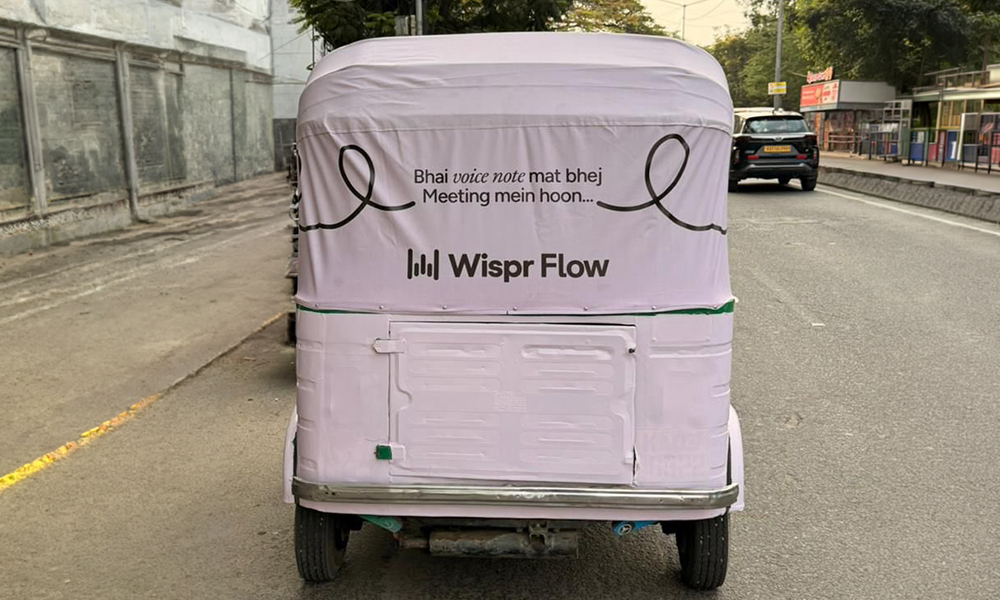
San Francisco-based voice-to-text app Wispr Flow has rolled out a unique out-of-home (OOH) campaign in Bengaluru, turning the city’s infamous traffic congestion into a high-impact advertising opportunity.
A Behaviour-Driven OOH Strategy
Instead of competing in crowded digital spaces, Wispr Flow has taken a hyper-local, insight-led approach. The campaign features over 100 branded auto rickshaws moving across key routes in Bengaluru, directly targeting commuters during long traffic halts.
The idea is rooted in a simple behavioural truth: while digital platforms dominate marketing budgets, commuters stuck in traffic are often not actively scrolling. Instead, their attention shifts to their surroundings—most commonly, the back of auto rickshaws in front of them.
Turning Traffic into Visibility
By transforming everyday autos into moving billboards, Wispr Flow ensures repeated and unavoidable brand exposure. The campaign uses soft-toned visuals and minimal messaging, strategically placed at eye level, making it easy for audiences to recall the brand even in slow-moving traffic conditions.
This format not only increases frequency but also builds familiarity through constant visual repetition across high-density traffic zones.
Why This Campaign Stands Out
Unlike traditional OOH campaigns that rely on scale through billboards or digital screens, Wispr Flow’s strategy focuses on contextual relevance and consumer behaviour. The campaign taps into real-life moments where attention is naturally available, making it both cost-effective and impactful.
Industry Perspective
The campaign highlights a growing trend in OOH advertising—context-first media planning, where brands prioritize environment and audience mindset over sheer visibility numbers. In a city like Bengaluru, where commute times can stretch for hours, such strategies offer a powerful alternative to digital clutter.
Wispr Flow’s Bengaluru campaign demonstrates how smart, insight-led OOH can outperform traditional digital strategies by meeting consumers where their attention actually is. By turning traffic delays into brand touchpoints, the company has delivered a campaign that is both locally relevant and strategically sharp.