Post Views: 4
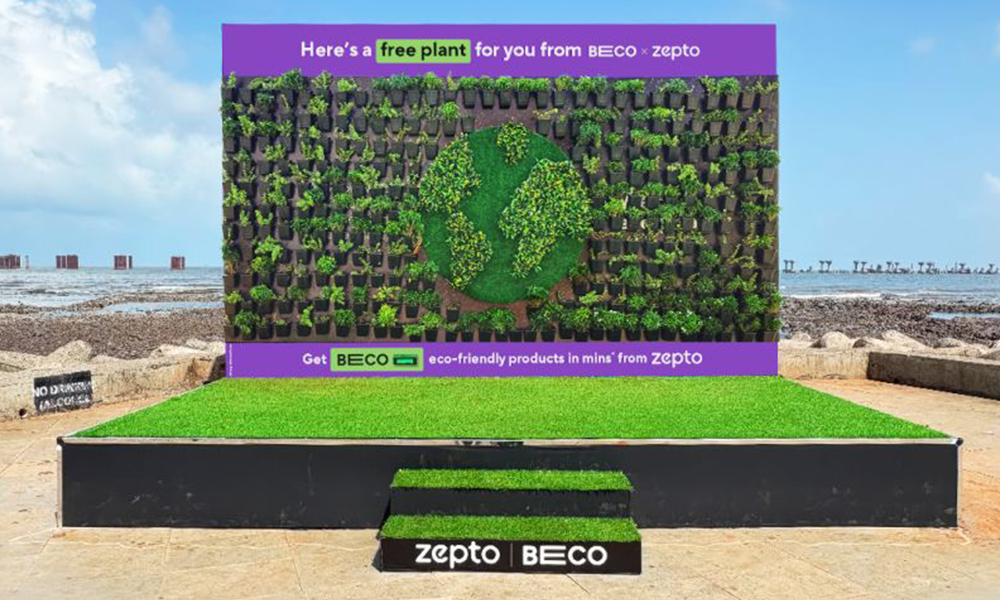
When a sustainable brand like Beco links up with a quick-commerce heavy hitter like Zepto, you expect high-velocity digital pushing. Instead, for World Environment Day, they went completely old-school geographic but hyper-modern on execution: a living, evolving physical activation at Bandstand, Bandra. From a media buying and tactical planning perspective, this isn’t just a feel-good eco-stunt. It’s a textbook lesson in high-impact experiential OOH that masterfully bridges the gap between physical dwell time and organic digital amplification. Here is an analysis of how this execution works through the lens of media placement, audience dynamics, and ROI.
The Tactical Breakdown
Metric/ Dimension
Campaign Execution Strategy
The Location Asset
Bandra Bandstand Promenade, Mumbai. A premium, high-footfall coastal zone. It naturally offers extended dwell times because people are walking, lounging, and gathering—completely distinct from a high-speed vehicular arterial route where a billboard gets a mere 3-second glance.
The Creative Shift:
Static to Interactive. The installation featured a wall built from hundreds of live potted plants, shaping a leaf motif. By inviting passersby to take a plant home, the asset was physically transformed throughout the day. It effectively flipped the audience from passive viewers into active co-creators.
The Agency Alignment
executed by Coral Media and installed by Sakshi Advertising Company, proves that specialized OOH agencies are increasingly leaning into structural, ambient, and non-traditional builds to break through urban clutter.
A Media Buyer’s Perspective:Why This Works.
When evaluating a premium ambient buy like this over standard digital signage or traditional large-format hoardings, three core media principles stand out:
1. Maximizing Contextual Dwell Time & Engagement.
In traditional OOH, you buy reach via vehicular traffic count. In experiential OOH, you are buying focused attention. Bandstand attracts health-conscious walkers, families, and young demographics during their leisure time. By placing a green, sustainable installation against Mumbai’s concrete seafront, the physical contrast creates an instant visual stop-signal.
2. The Built-in Diminishing Asset (An Elegant Scarcity Play).
What makes this brilliant from a planning perspective is the inventory mechanics of the installation itself. As people took plants away, the billboard changed shape. This real-time degradation created a natural sense of scarcity. In media terms, it created a “live event” feel—if you didn’t interact with it right then, you missed the experience entirely.
3. Low Working Media Spend,
Massive Earned Media ROIA single premium billboard in a top-tier Mumbai location can command massive monthly rentals. A one-day experiential activation like this significantly lowers pure media space costs while shifting budget into production. The real return on investment (ROI) comes from Earned Media Value (EMV). Every individual who picked up a plant became a micro-influencer, taking photos, sharing them on Instagram or LinkedIn, and organically driving localized digital reach that money can’t directly buy.
The Strategic Takeaway: True sustainability campaigns fail when they feel like corporate lectures. By distributing the solution directly into the hands of the consumer, Beco and Zepto proved that the most effective OOH isn’t just looked at—it’s felt, interacted with, and carried home.