OOH Advertising Trends in IPL 2026: From Static Billboards to 3D Anamorphic Displays

As the floodlights flicker on for the 2026 season of the Indian Premier League (IPL), the battle for supremacy isn’t just happening on the 22 yards of the pitch. It’s happening across the skylines of Mumbai, the transit hubs of Bengaluru, and the arterial roads of Mohali. While digital ad spends continue to climb, the 2026 season has reaffirmed a core truth of the Indian media landscape: In the “Proof Era,” physical scale is the ultimate trust marker.
Traditional billboards are currently anchoring IPL campaigns with unprecedented dominance, even as the “innovation budget” shifts toward high-spec digital formats. For brands looking to cut through the noise of a billion-dollar league, the message is clear—if you aren’t big in the real world, you aren’t big at all.
1. The Anchor of Authority: Traditional OOH’s Scale and Dominance
Despite the rapid rise of programmatic digital out-of-home (pDOOH), traditional static billboards remain the “anchors” of IPL marketing. In major metros, prime sites are currently commanding a 15–20% premium compared to last season.
Why Static Still Wins the Toss:
-
Uninterrupted Persistence: Unlike a 15-second skip-able YouTube ad or a scrolling social feed, a 40×40 billboard on the DND Flyway or the Western Express Highway offers 24/7 permanence.
-
The Psychological “Grand Slam”: There is a perceived “Proof of Power” associated with a massive physical installation. For fintech giants like PhonePe or betting-adjacent brands like Dream11, a massive billboard serves as a physical receipt of their market leadership.
-
Regional Dominance: For teams like the Punjab Kings or Gujarat Titans, static OOH allows for deep-rooted regional messaging. Using local dialects and localized star-power (like Shubman Gill in Ahmedabad) creates a “home turf” feeling that digital algorithms often struggle to replicate with the same weight.
2. The Epicenter of Eyeballs: Stadium Inventory in Focus
In 2026, the stadium itself has become a high-spec media asset. We are seeing a massive shift in how “Stadium OOH” is utilized. It’s no longer just about the perimeter boards; it’s about a 360-degree brand immersion.
| Media Asset | 2026 Innovation Level | Impact Strategy |
| Perimeter LED Boards | High | Dynamic, real-time trigger messaging based on match events (e.g., “Sixer” triggers a specific brand animation). |
| Stadium Façade Branding | Ultra-High | Transforming the exterior of stadiums like the Narendra Modi Stadium into massive projection-mapped canvases. |
| Sightscreen & Sightlines | Strategic | High-visibility zones that are unmissable during the broadcast “dead air” moments. |
The demand for stadium inventory has reached a “sold-out” status weeks in advance. Brands are no longer just buying “space”; they are buying “context.” For instance, beverage brands are timing their digital screen creative to hit exactly during the strategic timeouts, bridging the gap between the thirsty fan in the stand and the viewer at home.
3. Incremental Budgets: The Rise of pDOOH and Anamorphic 3D
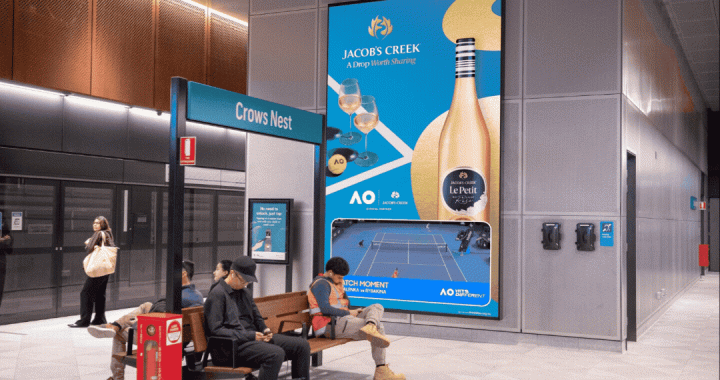
While static billboards provide the “scale,” the “innovation” is happening in the digital realm. Incremental budgets—the extra 15–20% of a marketing mix—are being diverted into Programmatic DOOH (pDOOH) and Anamorphic 3D displays.
The Anamorphic Revolution
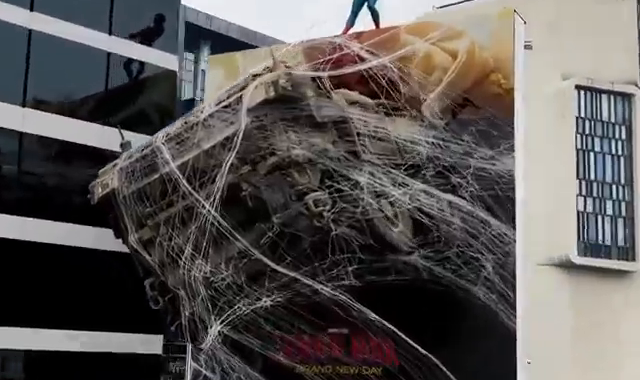
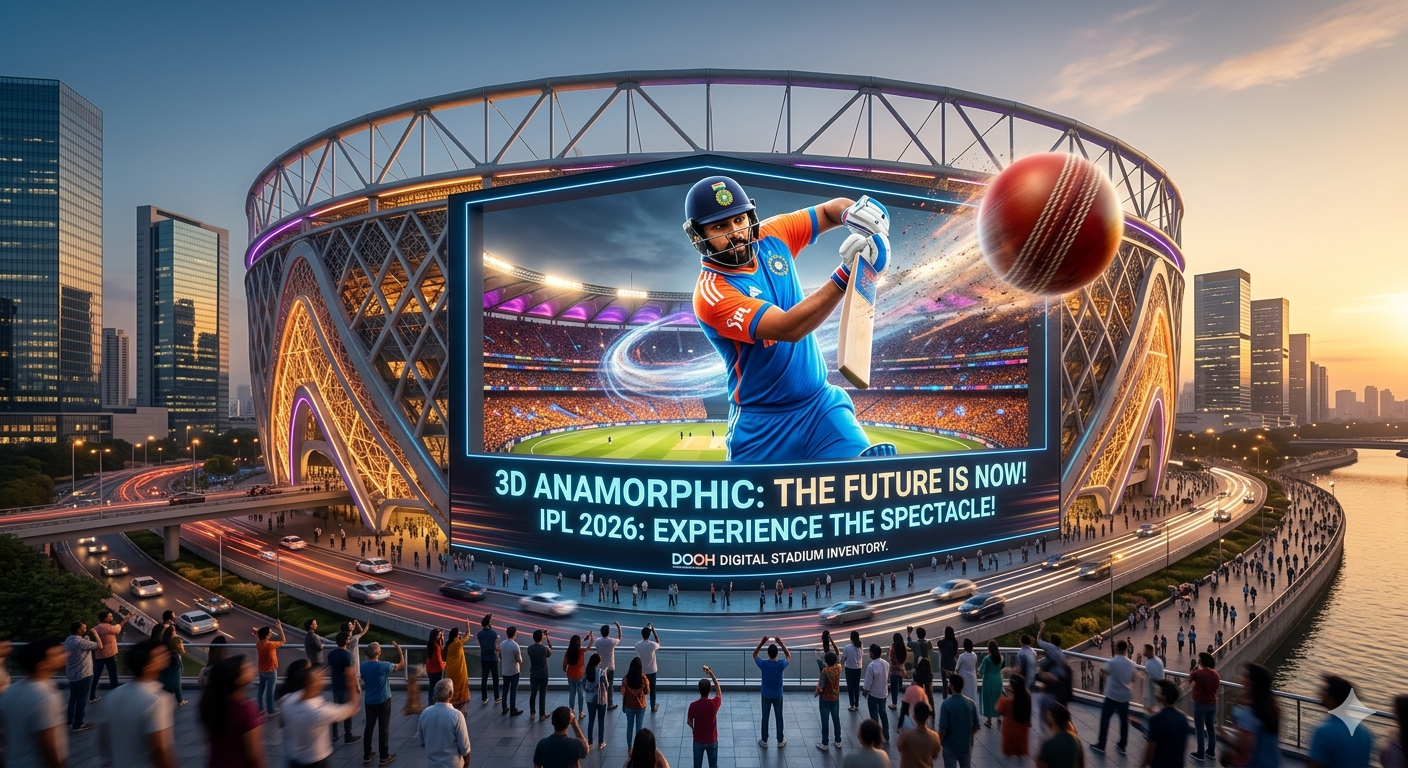
In high-footfall zones like CyberHub in Gurugram or BKC in Mumbai, 3D anamorphic billboards are the new “viral” currency. We are seeing players “step out” of screens to hit a six, or a brand’s new sneaker “kick” a cricket ball into the crowd. These installations aren’t just ads; they are content generators. Fans film them, share them on Instagram, and suddenly, a single physical site has reached millions of digital users.
pDOOH: Real-Time Reflexes
Programmatic OOH allows brands to be as agile as a fielder on the boundary. If a specific player hits a century, brands can instantly trigger “Congratulations” creative across 500 digital screens in that player’s home city. This level of contextual reactivity was impossible five years ago.
4. Bridging the Gap: The Physical-to-Digital Loop
The most successful IPL campaigns of 2026 are those that treat OOH as the starting point of a digital journey.
-
QR-Integrated Creative: We are seeing a 40% increase in OOH creative featuring high-spec QR codes. These aren’t just for “websites”; they lead to AR (Augmented Reality) filters where fans can “wear” the team jersey or take a selfie with a virtual version of the captain.
-
Geofencing the Stadium: Brands are geofencing IPL venues so that anyone exposed to the physical stadium branding receives a specific push notification or a “Limited Edition” offer on their smartphone. This turns a “passive” OOH view into an “active” digital lead.
5. The Verdict: The “Proof Era” of Sports Marketing
As we move deeper into the 2026 season, it is clear that IPL advertising has matured. The industry has moved past the “Digital vs. OOH” debate and into a period of Hybrid Dominance.
Traditional billboards provide the Authority and Trust, while Digital formats provide the Agility and Innovation. For any brand looking to win the IPL marketing cup, the strategy must be “Double-Barreled.” You need the big, static “anchor” to prove you are a serious player, and you need the high-tech digital “spark” to prove you are future-ready.
The skyline of India is currently a scoreboard. And right now, OOH is hitting it out of the park.