Havas Media Network and DeepIntent Bet Big on AI to Kill Healthcare Marketing

For decades, healthcare marketing operated on a brutal trade-off. Brands could have rigor, or they could have speed — rarely both. A campaign would launch, and then the real work began: waiting. Weeks turned into months before anyone could say with confidence whether the effort had moved the needle. Questions for the analytics team disappeared into a queue. By the time an insight surfaced, the moment it could have changed had already passed.
That era appears to be ending. A new partnership between Havas Media Network North America and healthcare data platform DeepIntent is positioning itself as a direct answer to the industry’s slowest, most persistent bottleneck: the gap between asking a question and acting on the answer.
From Six Months to Same Day
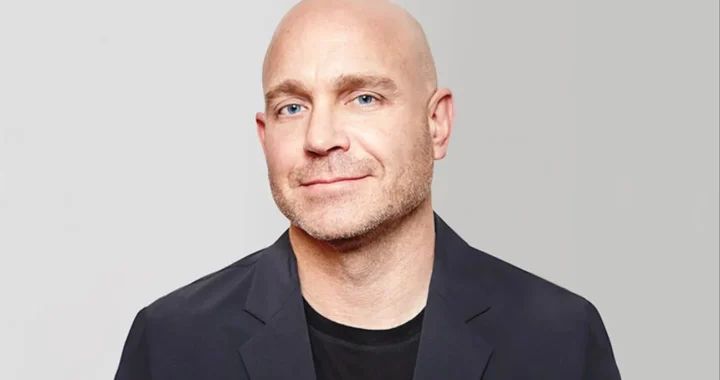
Chris Paquette, founder and CEO of DeepIntent, doesn’t mince words about how broken the old system was. The traditional feedback loop, he says, could “take literally half a year at best” — launch a campaign, wait, pull a CSV, analyze it manually, then start the cycle over again. By the time a brand understood what worked, the insight was often stale, the budget spent, and the next planning cycle already underway.
The partnership’s pitch is that AI collapses that timeline dramatically, compressing interpretation, analysis, and execution into a single day rather than a single season. For an industry built around quarterly reporting cycles and lagging indicators, that’s not an incremental improvement — it’s a structural shift in how decisions get made.
Greg James, CEO of Havas Media Network North America, frames the urgency in characteristically direct terms: a year in AI development time, he suggests, can feel like an eternity by comparison to how slowly healthcare marketing has historically moved. In a category notorious for its caution and its compliance-driven pace, that mismatch has real consequences.
The Numbers Behind the Push
The timing of this push isn’t incidental. Worldwide spending on generative AI is projected to reach approximately $644 billion in 2025, marking growth of more than 75% in a single year. Early enterprise adopters are already reporting tangible returns, with cost savings exceeding 15% and productivity gains topping 22%, according to Gartner research.
For healthcare marketers specifically, the stakes go beyond efficiency metrics. Roughly three in four American adults manage at least one chronic condition, meaning the timing of when a message reaches a patient — not just whether it reaches them at all — can meaningfully influence health outcomes. In that context, speed stops being a nice-to-have and becomes part of the actual deliverable.
Why It Matters
This collaboration reflects a broader recalibration happening across the advertising industry, where AI is no longer just a buzzword attached to pitch decks but an operational layer reshaping how agencies and data partners actually work together. Healthcare marketing, long considered one of the more conservative and slow-moving categories due to regulatory complexity and clinical sensitivity, is now becoming a proving ground for how fast that transformation can move when the underlying data infrastructure catches up to the ambition.
Whether this translates into measurably better patient outcomes — not just faster reporting — will be the real test. But the direction of travel is clear: in healthcare advertising, the wait is no longer the cost of doing business. It’s becoming the thing AI is built to eliminate.
For daily updates on marketing, media, brands, technology, AI, and the startups shaping the advertising industry, stay with DoohDigital.com.