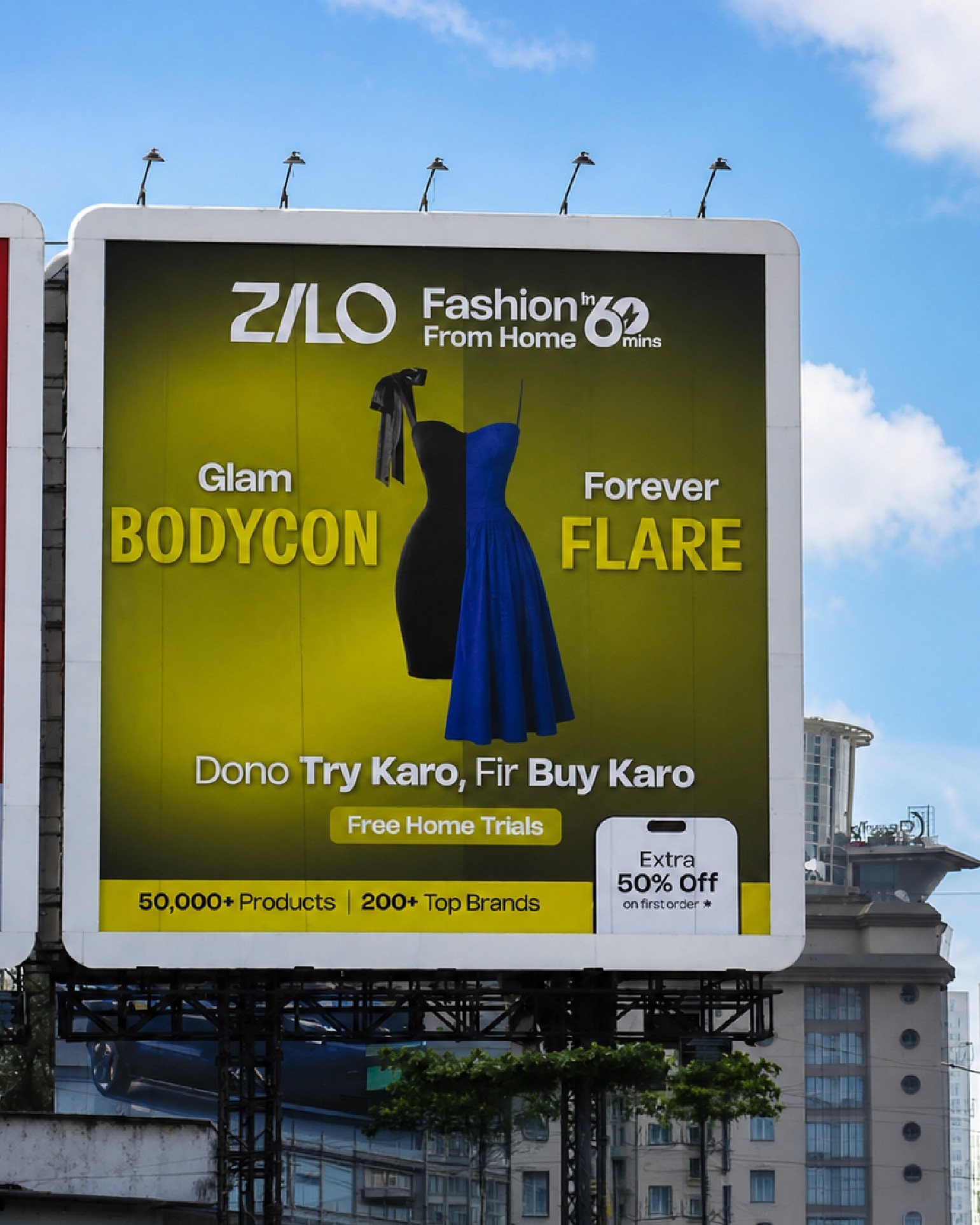
ZILO Launches Emotional OOH Campaign Around a Real Shopping Fear
Mumbai’s streets are wearing a new shade this month — green. Not because of another flashy sale or celebrity campaign, but because fashion startup ZILO has decided to spotlight one of the biggest anxieties in online shopping:
“What if it doesn’t fit?”
Through a city-wide out-of-home (OOH) campaign spread across highways, busy streets, and urban corners, the brand is introducing a shopping approach that feels less transactional and more human. Its message is simple, relatable, and instantly understandable:
“Fashion From Home. Try Karo, Fir Buy Karo.”
And judging by the reactions across Mumbai, the campaign is striking an emotional chord with shoppers.






A Fashion Campaign Built Around Confidence, Not Pressure
For years, online fashion has focused heavily on speed, discounts, and endless product choices. But while ecommerce platforms perfected fast delivery and scrolling experiences, one common fear continued to frustrate shoppers: Will the outfit actually fit the way I imagined? That hesitation has quietly become one of the biggest barriers in online fashion purchases, especially in India where sizing inconsistencies remain a major issue across brands. Instead of ignoring that problem, ZILO decided to bring it into public conversation. The campaign openly acknowledges the uncertainty customers feel before placing an order — something many brands rarely address in their advertising. By turning a real customer concern into the center of its communication, the brand’s message feels more authentic than promotional.
Mumbai’s Streets Become a Conversation Starter
The campaign’s green-themed billboards have started appearing across different parts of Mumbai, instantly standing out in the city’s crowded advertising landscape. Rather than relying on loud visuals or celebrity faces, the campaign leans into emotional relatability and clean messaging. According to the brand, one of the most rewarding moments has been watching people stop to read the billboards, smile at the messaging, click photos, and share them online. That kind of organic interaction is becoming increasingly valuable in modern outdoor advertising. In today’s social-media-driven marketing world, the most successful campaigns are no longer just seen — they are photographed, reposted, and talked about. And ZILO’s campaign appears to be doing exactly that.
Why the Campaign Feels Different
The line “Try Karo, Fir Buy Karo” resonates because it reflects how people naturally want to shop. Consumers today are becoming more cautious with fashion purchases, especially online. Rising return rates, sizing confusion, and disappointment with product expectations have made trust one of the biggest challenges for ecommerce brands. Instead of pushing urgency, ZILO’s messaging focuses on reassurance. That emotional shift matters. The campaign doesn’t scream “limited offer” or “shop now.” Instead, it communicates comfort and confidence — two emotions that are becoming increasingly powerful in consumer marketing. This approach also reflects a larger trend in Indian advertising where brands are moving toward culturally relatable, human-first storytelling instead of purely product-driven communication.
Outdoor Advertising Is Becoming More Emotional
India’s OOH advertising industry is rapidly evolving beyond traditional branding. Modern campaigns are increasingly designed to create emotional moments and social media engagement rather than simply visibility. ZILO’s campaign is a strong example of that shift. The messaging feels conversational, almost like something a friend would say before ordering clothes online. That familiarity makes the campaign feel less like advertising and more like shared experience. And in crowded cities like Mumbai — where people are exposed to thousands of ads daily — relatability often becomes more powerful than scale.
Social Media and Streets Working Together
Another reason the campaign is gaining attention is because it has been designed to naturally extend into social media conversations. The brand actively encouraged people to photograph the billboards and share sightings from around Mumbai. That strategy turns outdoor advertising into interactive content. Instead of a one-way marketing message, the campaign becomes participatory — allowing the audience to become part of the storytelling. This blend of physical visibility and digital sharing is becoming one of the strongest trends in modern advertising campaigns.
Final Thoughts
With its green billboards and emotionally relatable messaging, ZILO has managed to turn a simple consumer concern into a city-wide conversation. The campaign doesn’t rely on glamour or exaggeration. Instead, it focuses on something much more powerful: understanding how people actually feel when shopping online. And perhaps that is why Mumbai isn’t just noticing the campaign — it’s connecting with it.