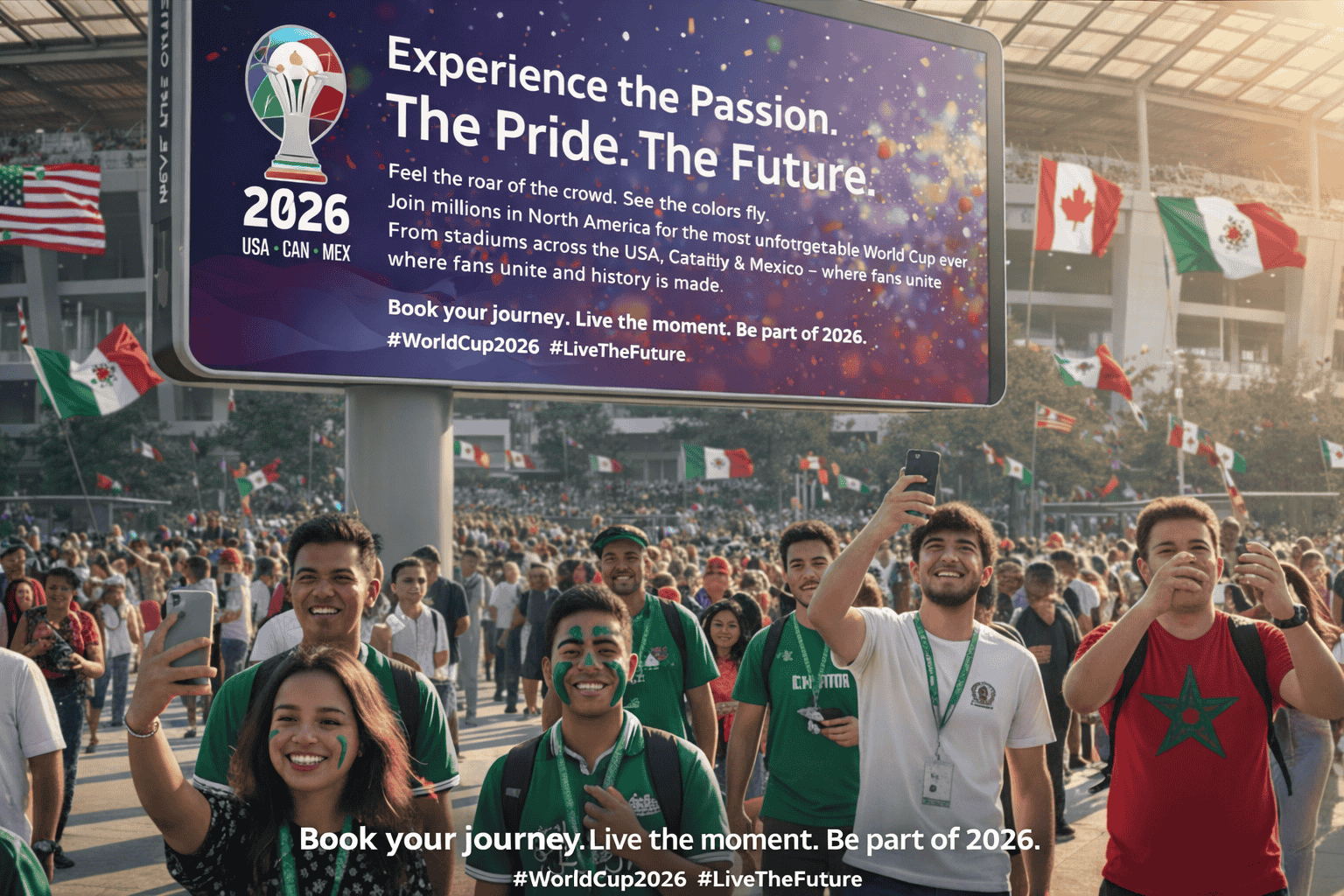
The 2026 FIFA World Cup marks a historic shift, expanding to 48 teams across 16 host cities in the United States, Mexico, and Canada. Following Qatar’s captivating 2022 tournament, Middle Eastern powerhouses—think Emirates, Etihad, Qatar Airways, STC, Etisalat, and tourism boards from Dubai, Saudi Arabia, and beyond—face a golden opportunity. These brands have mastered global sports sponsorships, but true dominance lies not in saturated TV spots or digital feeds. The game-changer? Out-of-Home (OOH) advertising blanketing North American streets during the summer spectacle.
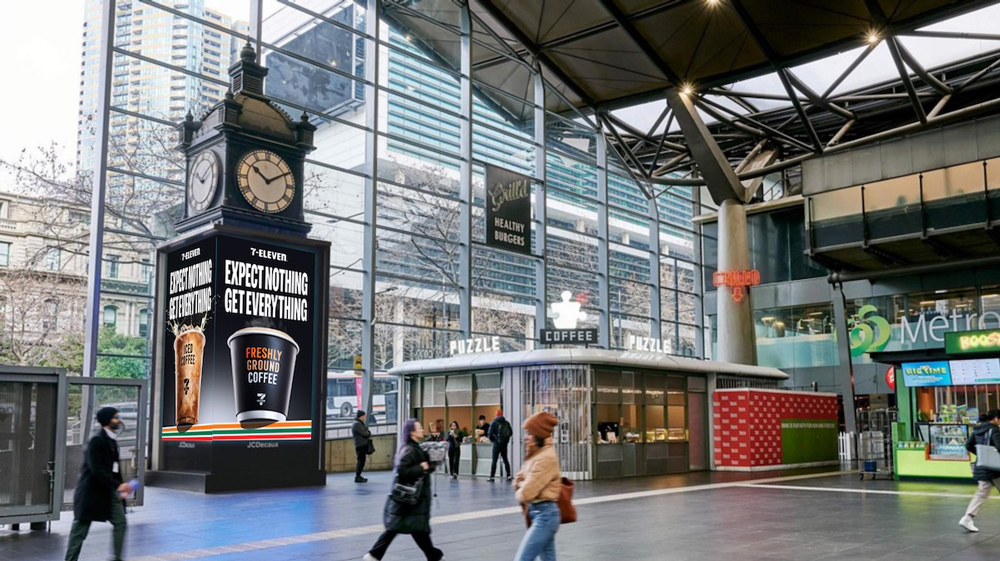
OOH, especially Digital OOH (DOOH), offers unmissable physical presence amid packed stadiums, fan zones, and transit hubs. With millions of fans flooding cities like Los Angeles, New York, Toronto, and Mexico City, Middle Eastern brands can export their prestige, drive tourism, and cement global stature. Here’s why prioritizing North American OOH is non-negotiable—and how to execute flawlessly.
Seizing Streets When Screens Are Sold Out
FIFA’s broadcast rights command astronomical fees, locking out most brands from official TV glory. Even sponsors face rigid creative constraints. OOH circumvents this via “halo marketing”—strategic placements that borrow the event’s aura without direct affiliation.
Picture full DOOH takeovers at LAX airport welcoming Argentina fans, or highway spectaculars en route to Atlanta’s Mercedes-Benz Stadium. Airlines can wrap subway cars in Vancouver, implying seamless journeys home. Telecoms dominate train stations near Philadelphia’s Lincoln Financial Field, signaling connectivity for live streams.
Non-sponsors thrive here: A Dubai tourism board’s immersive video walls at O’Hare could loop Burj Khalifa sunsets, evoking wanderlust without mentioning soccer. Data shows OOH lifts brand recall by 88% during events like the Super Bowl, far outpacing digital alone. In 2026’s frenzy, owning the physical path to venues turns transit into your private runway.
Broadcasting to a Borderless Crowd
North America’s World Cup won’t just draw locals. Expect 5-7 million international visitors from Europe, South America, Asia, and Africa, converging on host cities. A single DOOH billboard near Seattle’s Lumen Field or Kansas City’s Arrowhead Stadium becomes a global megaphone.
Middle Eastern brands tap this diversity effortlessly. Etisalat could beam 5G-powered holograms in Miami, visible to Brazilian and German tourists alike. Qatar Airways’ wraps on Mexico City’s metro reach Spanish-speaking fans, amplifying reach across languages.
Unlike fleeting social scrolls, OOH commands attention in high-dwell zones—fan zones, hotels, bars. Studies indicate event-tied OOH boosts purchase intent by 47% among travelers. For brands eyeing FDI or luxury sales, this condensed global audience is pure gold, forging emotional ties that echo post-tournament.
Elevating to Global Titan Status
Nothing screams prestige like commandeering North America’s iconic landscapes. Times Square’s LED canyons, Las Vegas Strip’s colossal arrays, or Toronto’s Yonge-Dundas Square— these are prestige playgrounds where Fortune 500 giants play.
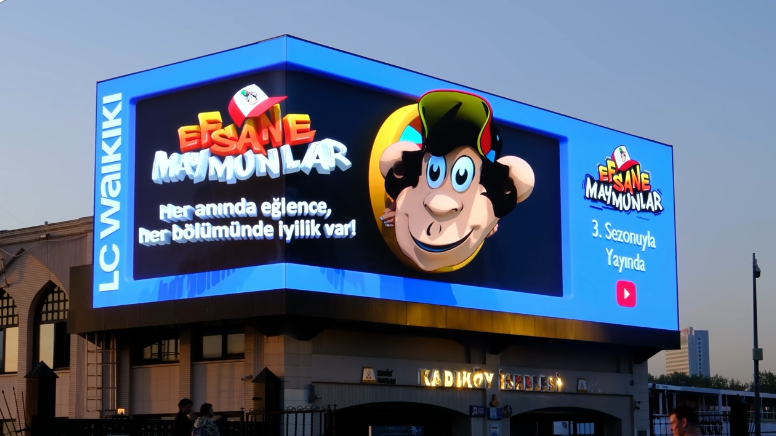
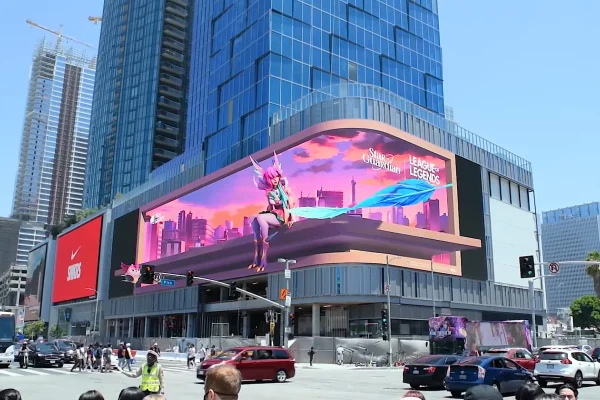
A Saudi Aramco anamorphic 3D display twisting above Times Square’s chaos positions NEOM as tomorrow’s metropolis. Emirates blanketing Chicago’s Magnificent Mile rivals Coca-Cola’s turf, psychologically equating Middle Eastern innovation with American might.
Psychologically, this “intrusion” into familiar spaces wields power. Consumers perceive dominators of landmark OOH as peers to Apple or Nike. For giga-projects like Riyadh Air or Abu Dhabi sovereign funds, it’s a flex: “We’re here, we’re huge, we’re inevitable.” Post-campaign surveys often show 70% uplift in perceived global leadership from such moves.
Igniting Tourism and Investment Fire
North America hungers for Middle Eastern allure—think UAE’s malls, Saudi’s Red Sea resorts, Qatar’s pearl-diving heritage. The World Cup’s euphoric vibe primes impulse: Fans in festive herds crave escape.
DOOH excels at immersion. Dynamic screens outside Boston’s Gillette Stadium could sync soccer highlights with Oman fjords, triggering bookings. Weather-triggered ads—”Escape the Heat to Bahrain’s Beaches”—personalize via programmatic tech.
Economically, it’s savvy. Ahmedabad-Gandhinagar’s metro ads (like Podhigai Media’s recent deal) prove transit OOH spikes footfall; scale that to World Cup metros. Middle East FDI targets North American HNIs—OOH plants seeds, converting 1 in 5 viewers to research trips per industry benchmarks. Airlines fill widebodies; hotels book suites.
Homecoming for Expats and Passionate Fans
Millions of Middle Eastern expats reside in North America, plus traveling ultras from Riyadh, Dubai, Doha. OOH bridges nostalgia: Bilingual Arabic-English creatives near Dallas’ AT&T Stadium shout “Ya Arabia!” amid Saudi flags.
Etisalat promotions for eSIMs ease connectivity woes; Aramco family deals nod to gatherings. This “home away from home” forges loyalty—expats share on WhatsApp, viraling campaigns. Emotional resonance trumps rational ads, with 65% loyalty lift reported in diaspora targeting.
Executing the OOH Takeover: Tactics and Partners
Start now—inventories vanish fast. Partner with OOH titans: Clear Channel Outdoor (ubiquitous US billboards), OUTFRONT Media (transit mastery), Pattison Outdoor (Canada’s king). Programmatic platforms like Vistar Media or Broadsign enable real-time bidding, geo-fencing stadium radii.
Creatives: Leverage DOOH dynamics—loop fan testimonials, trigger by scores (e.g., Gulf Air cheers UAE goals). Sustainability sells: Solar-powered screens align with Qatar’s green legacy.
Budget: $10-50M secures dominance across 5-10 cities, ROI via 6:1 media value per Nielsen. Measure with QR footfall attribution, facial coding for engagement.
The Bigger Play: Beyond Soccer
2026’s scale—104 matches, $11B economic boost—dwarfs prior Cups. For Middle East brands, OOH asserts post-Qatar relevance: “We hosted; now we invade.”
It’s leadership manifest—visual sovereignty in enemy territory (commercially speaking). Amid geopolitical noise, OOH screams unity, ambition, hospitality.
Delay risks scraps; pioneers claim crowns. Book the pitch, dominate the narrative. Middle Eastern brands aren’t guests—they’re the show.