Think about the last time a billboard actually made you stop and look. Not just glance — but genuinely pause, pull out your phone, and engage with it. That’s exactly what UNIQLO pulled off when it opened its first store in South India.
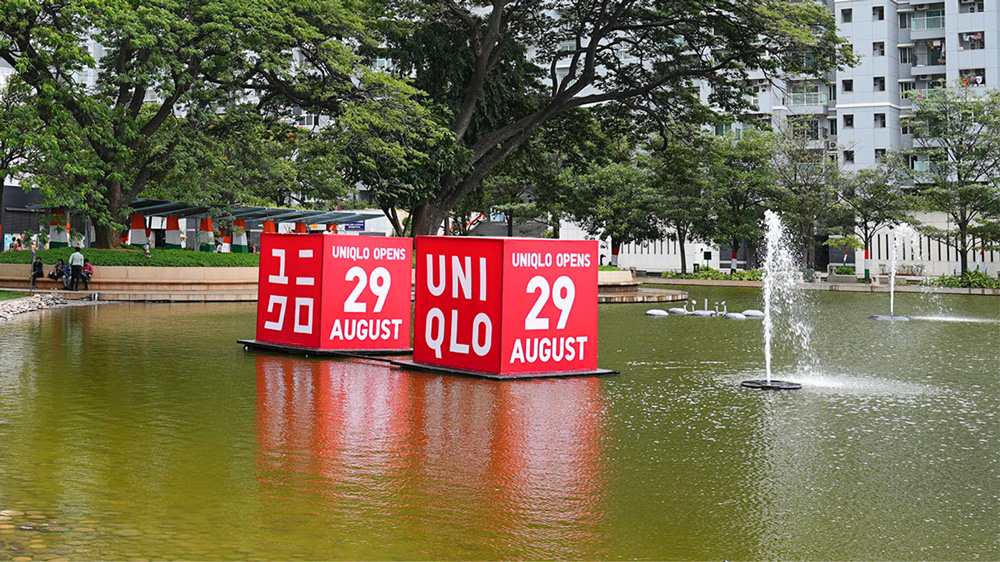
When the Japanese retail giant launched at Orion Mall in Bangalore, it didn’t rely on the usual sea of hoardings. Instead, it set up branded cubes — sleek, eye-catching boxes placed across malls, tech parks, and residential areas. But here’s where it got interesting: scan a QR code on one of those cubes, and suddenly a life-sized Rahul Dravid appeared on your phone screen through augmented reality, personally inviting you to visit the new store. It was the kind of moment that makes people say, “Wait, did you try that thing outside Forum Mall?”
That campaign told a bigger story about where outdoor advertising — or OOH (Out-of-Home) — is headed in India.
Awareness is the mission
UNIQLO is still relatively young in India. Six years in, the brand’s biggest challenge isn’t loyalty — it’s simply getting people to know it exists. That shapes everything about how they advertise.
Nidhi Rastogi, Marketing Head at UNIQLO India, is straightforward about this. OOH works for them when the message is simple and the goal is clear — a new store opening, a product feature, a city launch. In cities like Mumbai, Bangalore, and Pune, city-wide OOH campaigns have consistently delivered results. Metro branding in Delhi and Bangalore has also helped the brand reach its target audience right where they commute.
“OOH is quick,” Nidhi explains. “It drives awareness fast, which is exactly what we need when we enter a new city.”
But digital still leads the mix
Here’s the honest part: OOH isn’t UNIQLO’s biggest bet. Digital tops their media mix, and for a practical reason — it’s measurable. You can track clicks, conversions, and customer journeys. With OOH, that’s historically been harder to do.
Still, Nidhi doesn’t see this as a reason to abandon outdoor advertising. She sees it as a challenge to fix. And technology, she believes, is how you fix it.
The future is phygital
There’s a word the marketing world is leaning into right now: phygital. It means blending the physical and digital worlds — and it’s exactly how UNIQLO thinks about OOH going forward.
Programmatic OOH — where ads are served based on location data, timing, and audience targeting — is the direction Nidhi is most excited about. Imagine being able to activate a billboard near a specific pin code just as footfall peaks, or serve different creative to tech-park crowds versus mall shoppers. That level of precision would make OOH feel less like a shotgun and more like a scalpel.
“Once programmatic OOH gains ground,” she says, “it will have a completely new life in the media plan.”
Quality over quantity
There’s one more thing UNIQLO is firm about: they won’t advertise just anywhere. Cluttered surroundings dilute a brand’s message, and for a global label that’s meticulous about aesthetics, a bad site is worse than no site.
Getting better quality inventory — fewer cluttered hoardings, more premium, well-placed formats — is what would push UNIQLO to spend significantly more on OOH.
The takeaway? Outdoor advertising in India isn’t dying — it’s evolving. Brands that treat it as a dumb medium for passive eyeballs will keep getting dumb results. But brands willing to make it interactive, measurable, and genuinely creative? They’re just getting started.